The filter
A clogged filter can freeze an air conditioner, overheat a furnace, and choke airflow to every room. If it’s gray, replace it.
Service, Maintenance & Repair
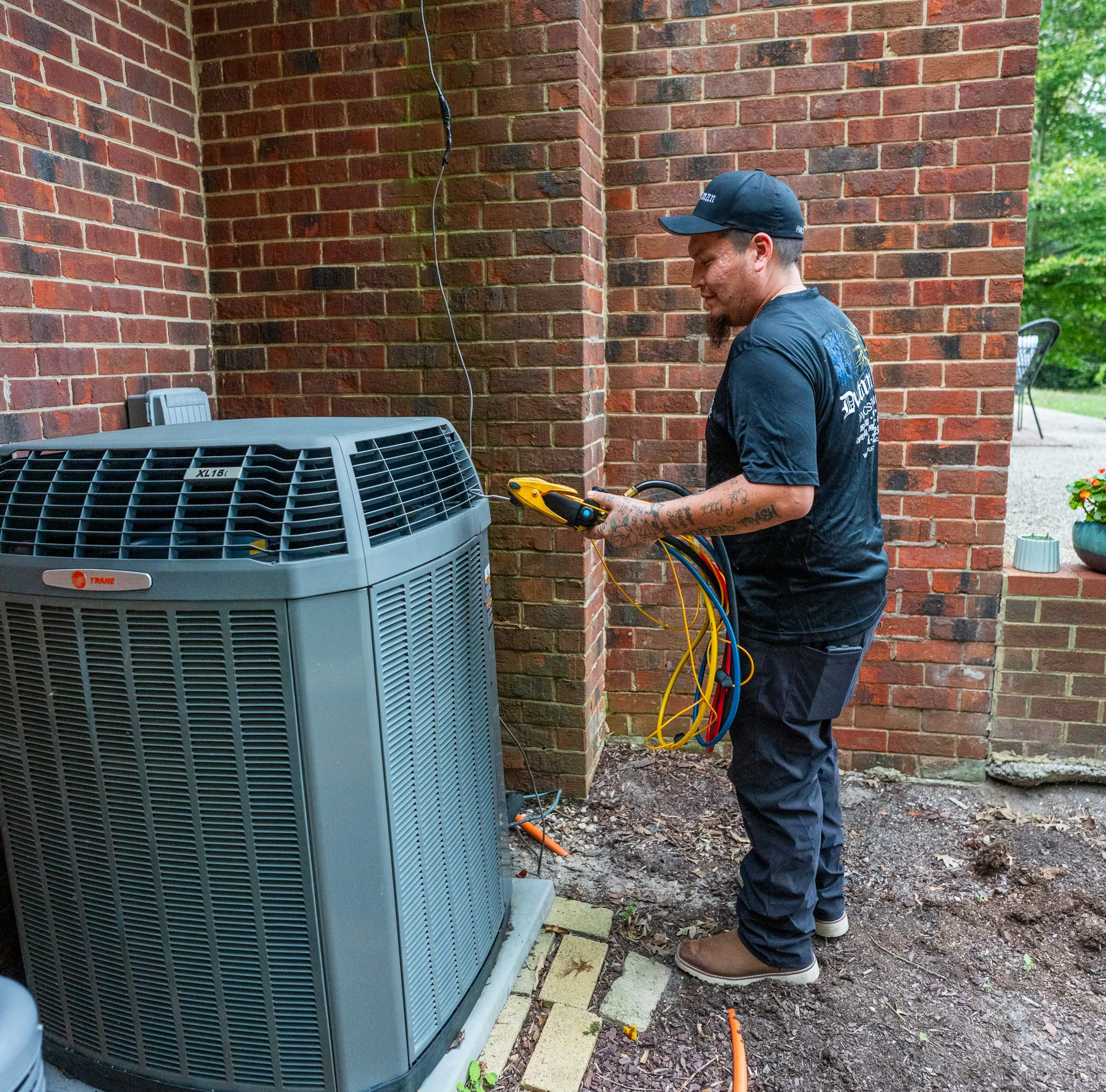
We diagnose and repair heating and cooling systems throughout Hampton Roads. From common AC and furnace problems to complex equipment issues, our experienced technicians identify the problem, explain your options, and get your system working properly.
Already been quoted a new system?
A lot of the calls we get start the same way: another company came out, spent twenty minutes with the system, and quoted a full replacement. Sometimes that’s the right call. Often it isn’t. Capacitors, igniters, flame sensors, defrost boards, drain lines, refrigerant leaks at a single fitting, and disconnected ducts all shut systems down, and none of them require new equipment.
We’ll diagnose it independently and tell you what we find. If the other company was right, we’ll say so and explain why. If they weren’t, you just saved the cost of a system you didn’t need.
Priority Service
Tell us which situation you’re in and we’ll take it from there.
What we repair
Repair, service, and diagnosis on every major brand, including the equipment most companies stopped working on years ago.
How we diagnose
Most companies find the first broken part, replace it, and leave. That works until the part fails again, because whatever killed it is still there. A capacitor that fails every summer, a flame sensor that keeps fouling, or a heat pump that keeps icing up is usually a symptom of something else.
We check the whole system before we fix anything: electrical components, refrigerant or gas pressures, airflow, drainage, controls, and, depending on the system, defrost, combustion, venting, or loop flow. Then we tell you what failed and why it failed.
And if the real problem is ductwork, we’ll say that too. Equipment choking on bad ducts will keep breaking no matter how many parts get replaced.
Maintenance & tune-ups
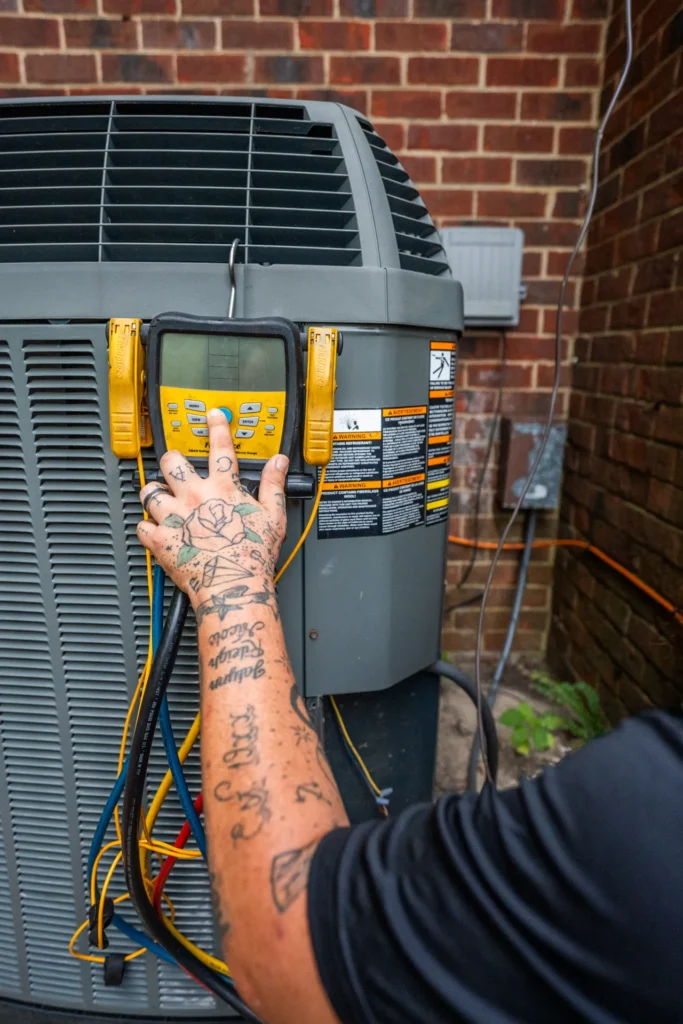
Clogged drain lines, dirty coils, worn igniters, fouled flame sensors, and failing capacitors almost always give warning before they shut a system down. A tune-up catches them while they’re small and cheap, before they become the call on the hottest afternoon or the coldest night of the year.
In this climate, cooling equipment works hard most of the year and coastal humidity is unkind to it. We recommend a cooling tune-up in spring, a heating tune-up in fall, and both for heat pumps, which work in every season.
Spring
Fall
Our Process
No surprise charges, and no work starts until you’ve said yes.
Before we get there
What you’re seeing, hearing, and smelling, and when it started. The details you give on the phone often point straight at the problem.
The system’s age, past repairs, and whether anyone else has already looked at it. If you’ve been quoted a replacement, tell us. We’ll look at it fresh.
The diagnostic visit
A full system check, not just the first broken part.
What failed, why it failed, what the repair involves, and what it costs. You decide before any work starts.
Before we pull out
Repair made, then the system run and checked so you know it’s actually working rather than just running.
If something else is wearing out, you’ll hear about it plainly, with no pressure to fix it today.
Before you call
We’d rather you not pay for a visit if the fix takes two minutes.
A clogged filter can freeze an air conditioner, overheat a furnace, and choke airflow to every room. If it’s gray, replace it.
Make sure it’s set to the right mode and temperature. A blank screen is often just dead batteries.
Check for a tripped breaker and make sure the switch by the outdoor unit is on. Reset a breaker once. If it trips again, stop and call us.
Most furnaces won’t run unless the front panel is fully seated. A safety switch behind it keeps the burners off.
Many systems shut down when the condensate drain backs up. Water in the pan under the indoor unit is the giveaway.
If none of those solve it, call us and tell us what you already checked. It saves time on the visit.
Financing is available on larger repairs, and we offer a cash discount if you’d rather not finance. We’ll lay out both so you can see the real difference.
Our Brands






















































Testimonials
Mike was very professional and thorough throughout the entire process. Haven’t felt with any HVAC service before Ductman and will never choose anything else now. Thank you for a great experience.

 Robert Clark
 Google review
Everyone was respectful, a pleasure to work with, and they got the job done in a timely fashion with a great quality of work. My house heats even better now than before. 10/10 I absolutely recommend them.
 James Maurmeier
Google review
Furnace went out on what seems like the coldest day so far this year. Chris answered our call and promptly sent out a technician to review the issue and provide an estimate. They were able to order and install the part quickly for a reasonable price. I would definitely call them again if we had another HVAC issue.
 Charisse
Google review
Our Work
FAQ
It depends entirely on what failed. A capacitor, flame sensor, or clogged drain is a small repair; a compressor or heat exchanger is a large one. We’ll tell you exactly what it costs before any work starts.
Yes. Emergency service is available 24/7. Call 757-241-0723.
Yes. We’ll diagnose it ourselves and tell you whether we agree, with the reasoning either way.
A cooling tune-up covers the outdoor coil, refrigerant pressures and temperature split, capacitors, contactors and electrical connections, the condensate drain, blower and airflow, and the filter and thermostat. A heating tune-up covers ignition and the flame sensor, the heat exchanger, gas pressure, venting and combustion, heat pump defrost and auxiliary heat, blower and airflow, and the filter and thermostat.
We recommend a cooling tune-up in spring, a heating tune-up in fall, and both for heat pumps, which work in every season.
Yes. Repair, service, and diagnosis on every major brand, including the equipment most companies stopped working on years ago.
Get Started
Call us or send a request. We’ll find what actually failed, explain your options in plain English, and get your system running again.