Running, but not cooling
The fan is on and air is moving, but it isn’t cold. Most often low refrigerant from a leak, a failed capacitor keeping the compressor from starting, or a dirty coil that can’t move heat.
AC Repair
A system that won’t cool can be a fifteen-dollar part or a failing compressor, and from inside the house they feel exactly the same. We diagnose the whole system before we touch anything, tell you what it’ll take to fix, and get it running again. If it’s worth repairing, that’s what we’ll recommend.
Told your AC is done?
Here’s a call we get all the time: another company came out, looked at the system for twenty minutes, and quoted a full replacement. Sometimes that’s the right call. Often it isn’t. A failed capacitor, a refrigerant leak at a single fitting, or a clogged drain line can all shut an air conditioner down, and none of them require new equipment.
We’ll diagnose it independently and tell you what we find. If the other company was right, we’ll say so and explain why. If they weren’t, you just saved the cost of a system you didn’t need.
Here are some common problems, what might be causing them, and when it’s time for a repair.
The fan is on and air is moving, but it isn’t cold. Most often low refrigerant from a leak, a failed capacitor keeping the compressor from starting, or a dirty coil that can’t move heat.
Nothing outside, nothing inside. Usually electrical: a tripped breaker, a failed contactor, a blown fuse at the disconnect, or a thermostat that isn’t calling for cooling.
Ice on the copper line or the indoor coil means the system can’t absorb heat properly. Restricted airflow and low refrigerant are the two usual causes. Turn the system off and let it thaw before we arrive.
Water around the indoor unit is almost always the condensate system: a clogged drain line, a cracked pan, or a failed condensate pump. In a humid coastal climate, these drain lines clog constantly.
Never shutting off, or switching on and off every few minutes. Can be refrigerant, airflow, a failing component, or a system that was sized wrong from the start.
Repair Path
Not every AC problem means you need a new system. But depending on your equipment’s age, condition, and the cost of repairs, replacement may be the smarter long-term investment.
We’ll help you understand your options so you can make the right decision for your home.
When to repair
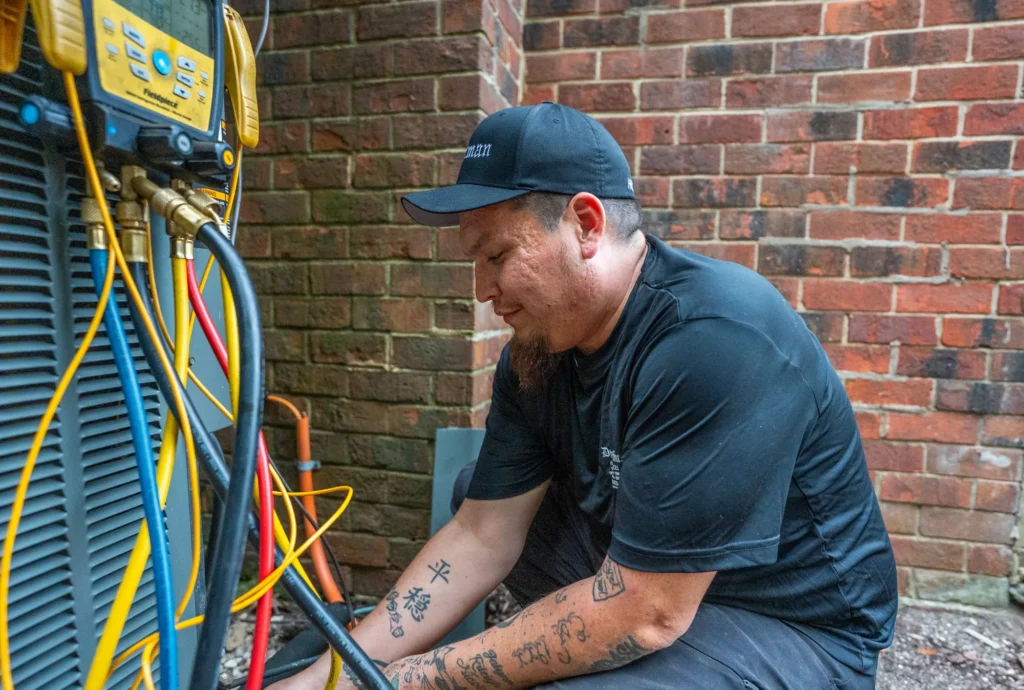
Repair is often the best option when your system is relatively new, has been reliable, and the problem can be fixed at a reasonable cost.

When to replace
Replacement may make more sense if your system is aging, requires frequent repairs, or needs an expensive component replaced. A new system can also offer improved efficiency and comfort.
What we repair
We repair every major brand, and we’ve had our hands inside all of them for two decades. Because we’re not a franchise with a replacement quota, the goal on every call is the same: find what failed and fix it properly.
The most common AC failures in this climate. Heat and humidity are hard on them, and when they go, the system stops.
Located, repaired, and verified before the system is recharged. We don’t top off a leaking system and send you a bill.
Outdoor condenser fans and indoor blower motors, repaired or replaced to keep air moving across the coils.
The expensive component, and the one most often misdiagnosed. We confirm a compressor has actually failed before anyone talks about replacing one.
Cleared, repaired, or replaced so water leaves the house instead of collecting under it.
Sometimes the air conditioner is fine and it’s simply not being told to run.
Our Brands
























































How we diagnose
Most companies find the first broken part, replace it, and leave. That works until the part fails again, because whatever killed it is still there. A capacitor that fails every summer is often a symptom of a fan motor struggling or a system running too hot, and swapping capacitors forever doesn’t fix either one.
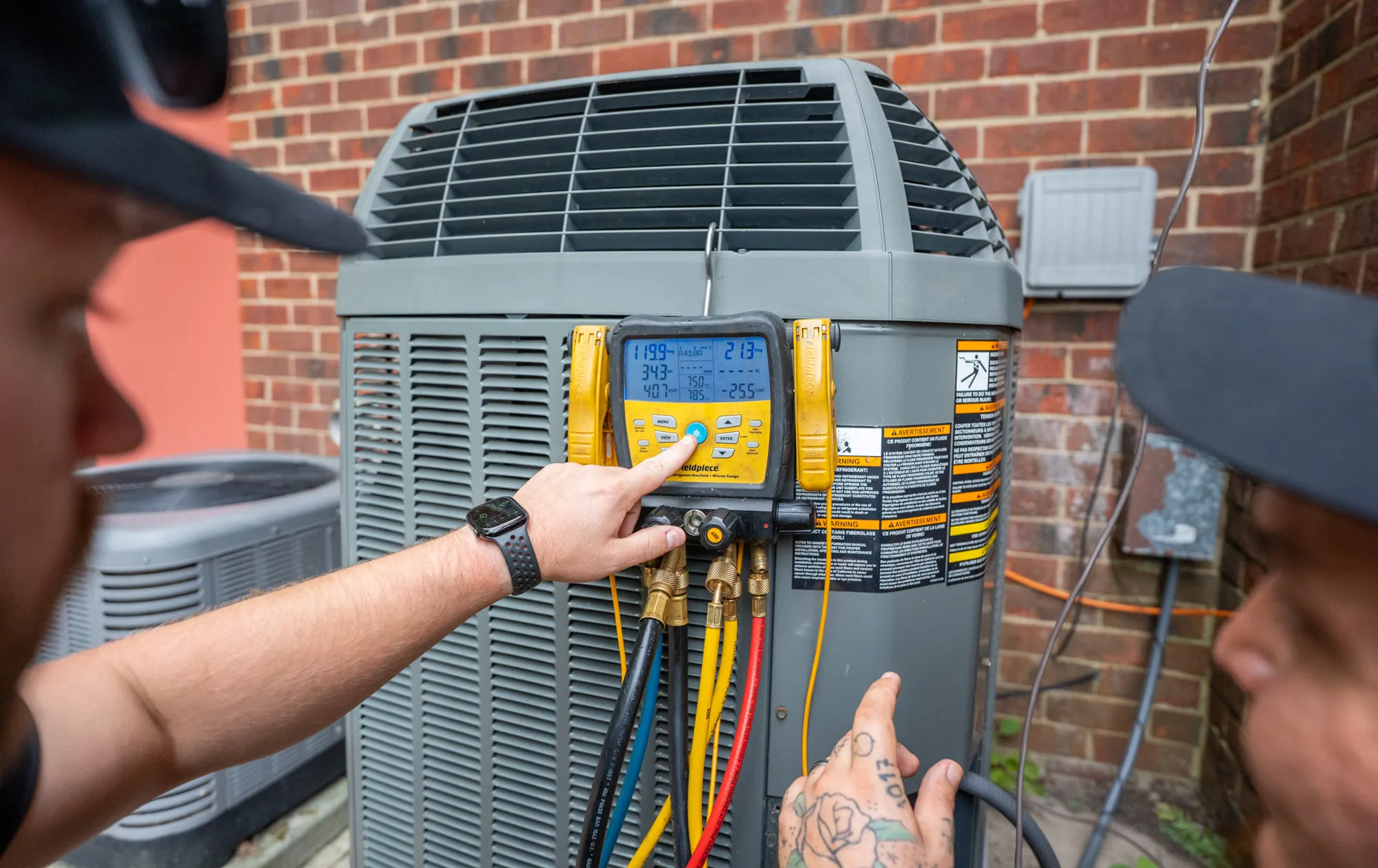
We check the whole system before we fix anything: electrical components, refrigerant pressures, airflow, coil condition, the drain system, and the thermostat. Then we tell you what failed and why it failed.
And if the real problem is ductwork, we’ll say that too. An air conditioner choking on bad ducts will keep breaking no matter how many parts get replaced.

Our Process
No surprise charges, and no work starts until you’ve said yes.
Before we get there
What you’re seeing, hearing, and smelling, and when it started. The details you give on the phone often point straight at the problem.
The system’s age, past repairs, and whether anyone else has already looked at it. If you’ve been quoted a replacement, tell us. We’ll look at it fresh.
The diagnostic visit
A full system check, not just the first broken part. Electrical, refrigerant, airflow, drainage, and controls.
What failed, why it failed, what the repair involves, and what it costs. You decide before any work starts.
Before we pull out
Repair made, then the system run and checked: pressures, temperature split, and airflow, so you know it’s actually working rather than just running.
If something else is wearing out, you’ll hear about it plainly, with no pressure to fix it today.
Refrigerant, plainly
Your air conditioner doesn’t consume refrigerant like a car uses fuel. Refrigerant circulates through a closed system, so the amount shouldn’t decrease during normal operation. If your AC is low on refrigerant, there may be a leak or an issue with how the system was previously charged.
Adding more refrigerant might temporarily restore cooling, but it won’t fix an active leak. Our technicians can inspect the system, check refrigerant levels, and determine whether leak detection or other repairs are needed.
Depending on the location and severity of the problem, a repair may be relatively straightforward. In other cases, replacing a damaged component or considering a new system may make more financial sense. We’ll explain what we find and help you understand your options.
Testimonials
Mike was very professional and thorough throughout the entire process. Haven’t felt with any HVAC service before Ductman and will never choose anything else now. Thank you for a great experience.

 Robert Clark
 Google review
Everyone was respectful, a pleasure to work with, and they got the job done in a timely fashion with a great quality of work. My house heats even better now than before. 10/10 I absolutely recommend them.
 James Maurmeier
Google review
Furnace went out on what seems like the coldest day so far this year. Chris answered our call and promptly sent out a technician to review the issue and provide an estimate. They were able to order and install the part quickly for a reasonable price. I would definitely call them again if we had another HVAC issue.
 Charisse
Google review
Our Work
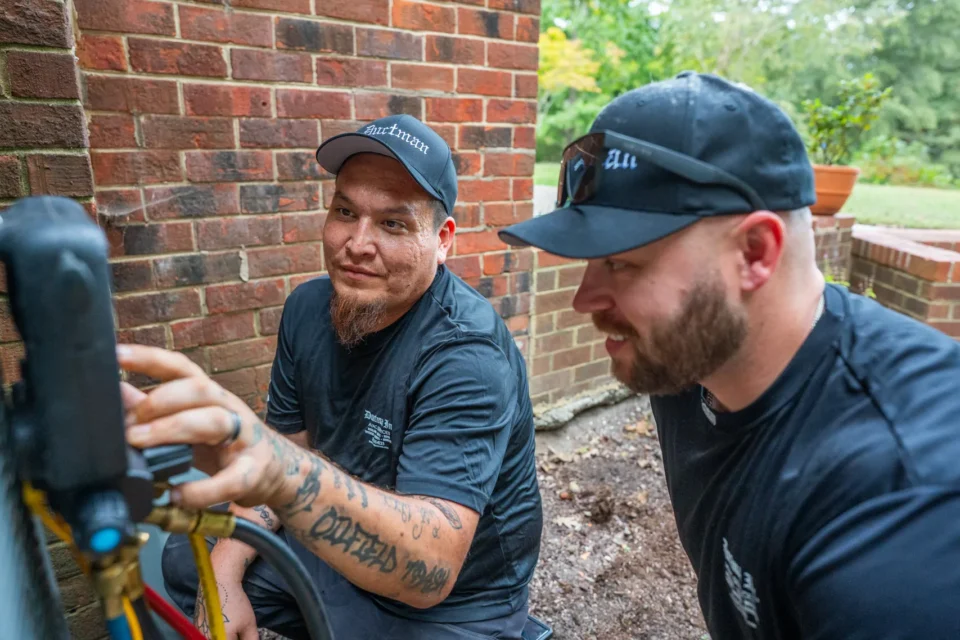
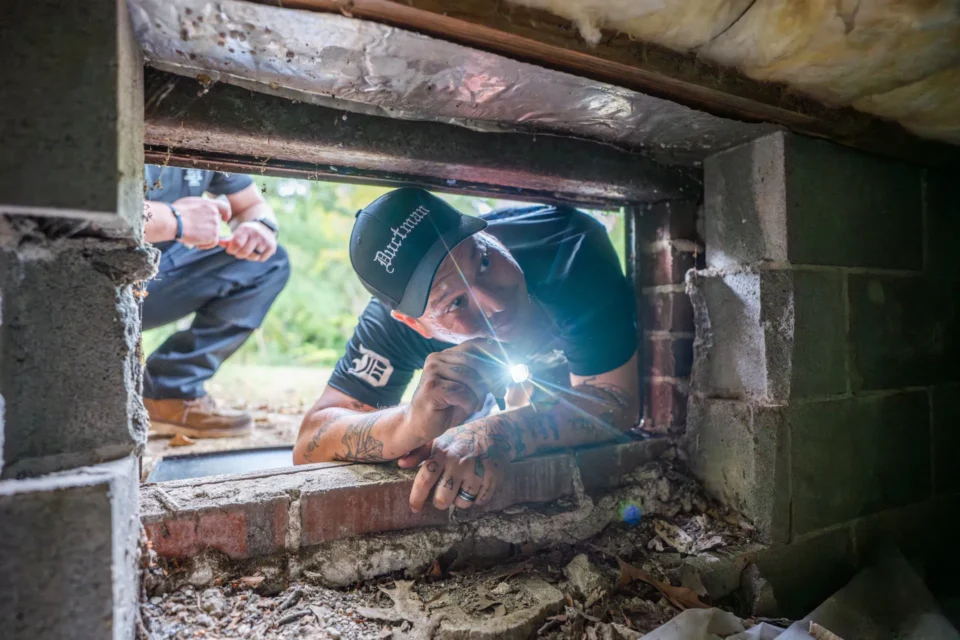
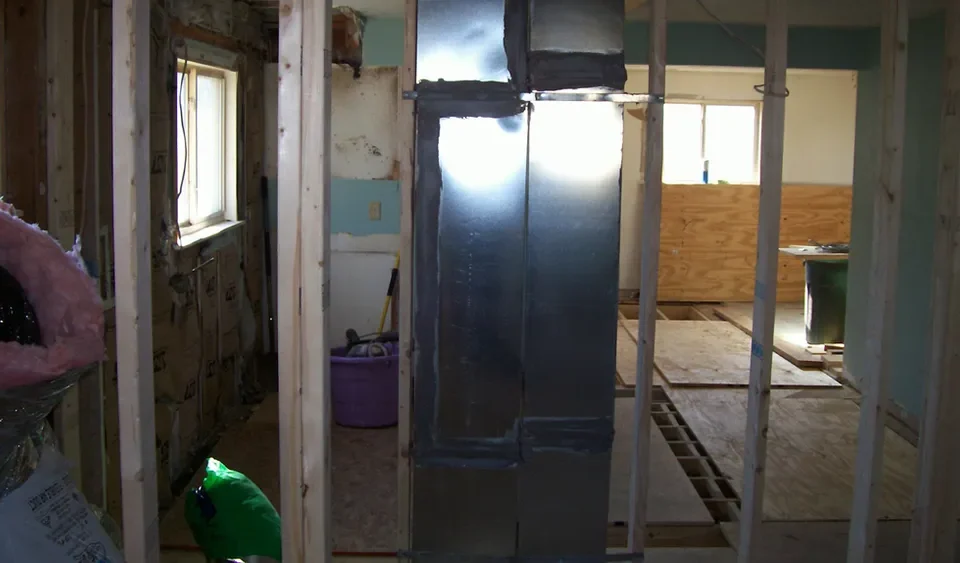
Clogged drain lines, dirty coils, and failing capacitors usually give warning before they shut a system down. A maintenance visit catches them while they’re small. Financing is also available on larger repairs.
FAQ
It depends on what failed. A system that won’t cool can be a fifteen-dollar part or a failing compressor, and from inside the house they feel exactly the same. We diagnose the whole system first, then tell you what failed, what the repair involves, and what it costs. You decide before any work starts.
Most often a refrigerant leak, a failed capacitor that’s keeping the compressor from starting, or a dirty coil. Restricted airflow from a clogged filter is worth checking first, since it’s the one you can fix yourself.
Turn the system off and let it thaw before we arrive. Ice on the copper line or the indoor coil means the system can’t absorb heat properly; restricted airflow and low refrigerant are the two usual causes.
It’s almost always the condensate system: a clogged drain line, a cracked pan, or a failed condensate pump. In a humid coastal climate, these drain lines clog constantly.
Refrigerant isn’t used up. It circulates in a sealed loop. If your system is low, it’s leaking. We find the leak first; often it’s a single fitting, a valve core, or a section of line that can be repaired, and the system stays charged afterward.
Most air conditioners we’re called out to fix should be fixed. A failed compressor on a fifteen-year-old system, or a major leak on equipment that still runs on R-22, can cost enough that the money is better spent on something new. When that’s the case, we’ll show you both numbers side by side and let you decide.
Yes. We’ll diagnose it independently and tell you what we find. If the other company was right, we’ll say so and explain why. If they weren’t, you just saved the cost of a system you didn’t need.
Yes. We repair every major brand, and we’ve had our hands inside all of them for two decades.
Get Started
Call us or send a request. We’ll find what actually failed, explain your options in plain English, and get your house cool again.