Restaurants
Dining rooms, kitchens, and the exhaust and make-up air that keep them working.
Commercial Kitchen Hoods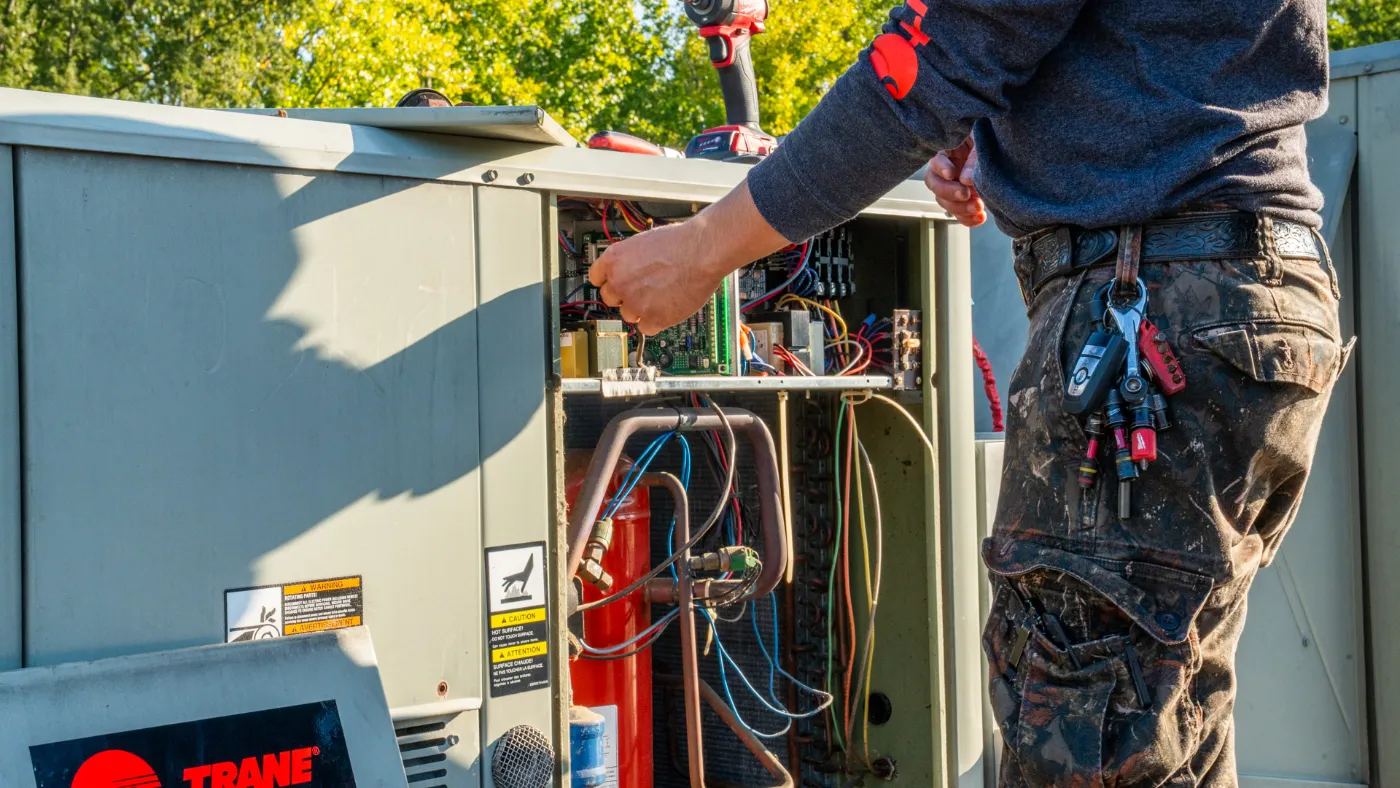
Commercial HVAC Service & Maintenance
When the HVAC goes down, business slows down: customers leave, tenants call, and inventory spoils. We maintain and repair commercial systems across Hampton Roads on a schedule built around your operating hours, and we document every unit so you know what’s coming before it fails.
Before you replace anything
A lot of commercial equipment gets replaced because nobody was maintaining it. A rooftop unit with a slipping belt, a clogged coil, a failed capacitor, and a drain pan full of water will eventually stop, and when it does, the call usually ends with a quote for a new unit.
Most of those failures were visible months earlier. We’d rather catch them on a scheduled visit than on a Saturday in July, and when a unit is near the end, we’d rather tell you a season ahead so you can plan it.
Need a replacement priced? Commercial HVAC Replacement & Installation
Who we serve
Dining rooms, kitchens, and the exhaust and make-up air that keep them working.
Commercial Kitchen HoodsStorefronts and shopping centers where comfort affects how long customers stay.
Practices and facilities where temperature, humidity, and reliability aren’t optional.
Tenant comfort, multiple zones, and complaints that land on the property manager’s desk.
Large equipment, strict schedules, and systems that support operations.
Industrial HVACMultiple buildings and tenants, one contractor accountable for all of it.
Service Path
Most of our commercial clients start with a scheduled maintenance program, because it’s the cheapest way to keep equipment running and the only way to see failures coming. Some prefer to call when something breaks. We do both, and we’ll tell you honestly which fits your building.
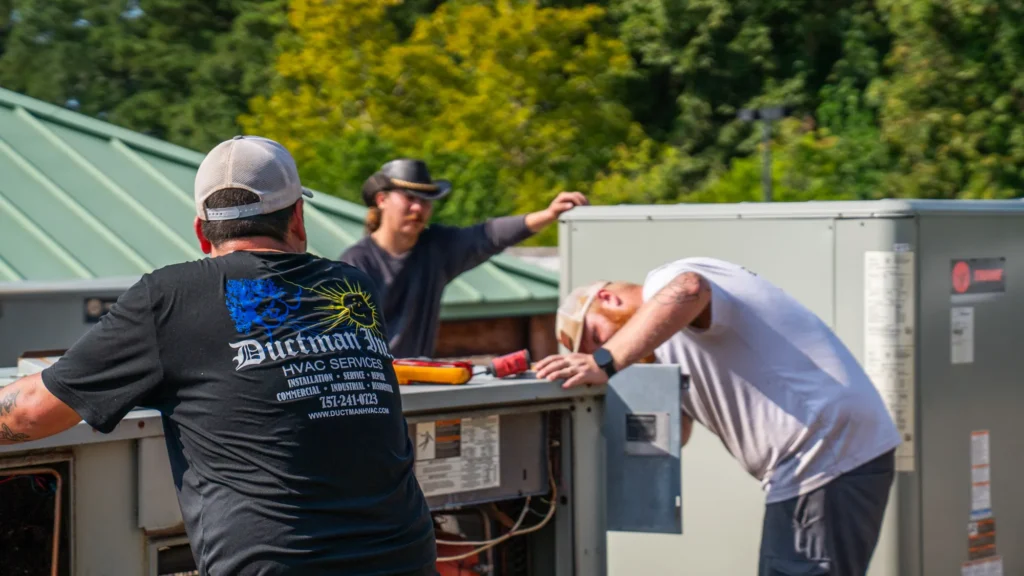
Most commercial buildings
Scheduled visits at a frequency that fits your equipment and your business, every unit serviced and documented, and a running picture of what needs attention next. The right answer for most commercial buildings.
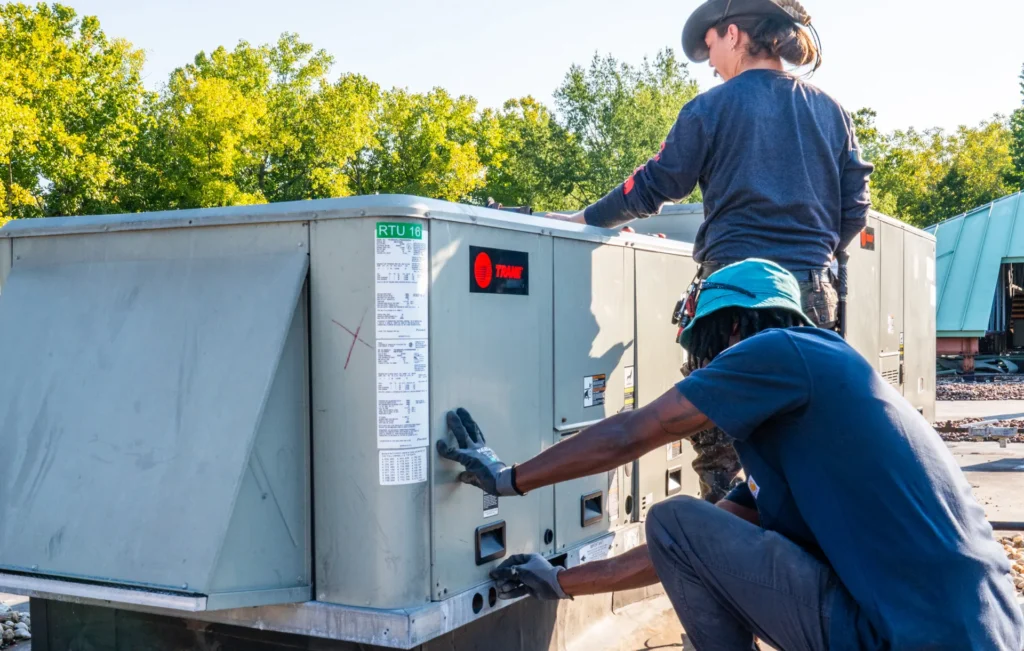
When something fails
Diagnosis and repair when something fails, on any brand and any system type. We find what actually failed, fix it, and tell you what we saw while we were there.
What we maintain
We service rooftop units, split systems, package units, VAV and VRF systems, unit heaters, and the exhaust and controls around them, on every major brand.
Replaced on schedule, belts tensioned and checked for wear before they slip or break.
Condenser and evaporator coils cleaned so the equipment isn’t working harder than it should in coastal heat and humidity.
Pressures, capacitors, contactors, and connections checked before they fail under load.
Condensate lines cleared and pans inspected, before water reaches a ceiling tile or a tenant.
Thermostats, schedules, sensors, and economizer operation verified so the building isn’t conditioning empty space.
Burners, heat exchangers, gas pressure, and exhaust fans checked.
Commercial Gas Lines & Kitchen HoodsHow we document
Most maintenance companies change the filters, glance at the unit, and leave a ticket that says “PM performed.” That tells you a visit happened. It doesn’t tell you which of your twelve rooftop units is a season from failing.
We document every unit on every visit: its condition, the readings we took, what we did, and what we’d recommend next. Over time, that becomes a service history for each piece of equipment: the record you need to budget replacements, answer a landlord or an insurer, or hand to a buyer if the building sells.
When a unit is getting close to the end, you’ll see it in the reports long before it shows up as an emergency.
Our Process
Clear scope, no surprise charges, and work scheduled around your business.
Before the first visit
Every unit inventoried: type, age, condition, and access. Rooftop, mechanical room, and kitchen.
Visit frequency matched to the equipment and the season, timed around your operating hours.
Every visit
Filters, belts, coils, drains, electrical, refrigerant, controls, and heating, per the scope we agreed.
Readings, condition, work performed, and recommendations for each unit, sent to whoever you designate.
Between visits
Equipment approaching the end of its life gets identified early, so replacements can be budgeted and scheduled instead of rushed.
When something breaks, we already know the equipment and its history, which makes the diagnosis faster.
Capital planning, plainly
Every piece of HVAC equipment in your building will need replacing eventually. The question is whether it happens on your schedule or the equipment’s.
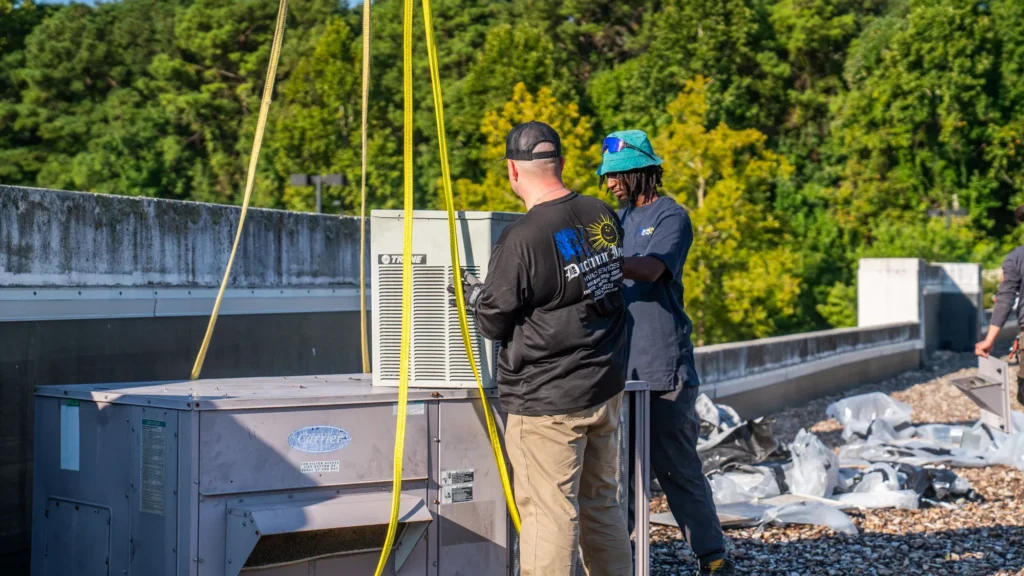
An emergency replacement usually happens at the worst time: the hottest week of the year, when equipment is backordered, crane time is booked, and your business is losing customers or tenants every hour the space is down. You take whatever unit is available, at whatever it costs, and you install it under pressure.
A planned replacement happens in the spring or fall, with equipment ordered ahead, the crane scheduled, the work done after hours, and the cost in a budget you set months earlier. The difference between the two is almost entirely information: knowing which units are close to the end before they get there. That’s what documented maintenance gives you.
One contractor, one maintenance schedule, and one set of reports across every property and every tenant. We’ll walk your buildings and put together a program that fits the portfolio.
Testimonials
Mike was very professional and thorough throughout the entire process. Haven’t felt with any HVAC service before Ductman and will never choose anything else now. Thank you for a great experience.

 Robert Clark
 Google review
Everyone was respectful, a pleasure to work with, and they got the job done in a timely fashion with a great quality of work. My house heats even better now than before. 10/10 I absolutely recommend them.
 James Maurmeier
Google review
Furnace went out on what seems like the coldest day so far this year. Chris answered our call and promptly sent out a technician to review the issue and provide an estimate. They were able to order and install the part quickly for a reasonable price. I would definitely call them again if we had another HVAC issue.
 Charisse
Google review
Our Work
FAQ
Scheduled visits covering filters, belts, coils, drains, refrigerant, electrical, controls, heating, and exhaust, with every unit documented. Scope and frequency are set to fit your equipment and your building.
It depends on the equipment and the season. We match visit frequency to both, and time the visits around your operating hours.
Yes. Maintenance runs on a schedule built around your operating hours.
Yes. Rooftop units, split systems, package units, VAV and VRF systems, unit heaters, and the exhaust and controls around them, on every major brand.
Yes. One contractor, one maintenance schedule, and one set of reports across every property and every tenant.
Readings, condition, work performed, and recommendations for each unit on every visit, sent to whoever you designate. Over time it becomes a service history for each piece of equipment.
Yes. Emergency service is available 24/7. Call 757-241-0723.
Yes. We diagnose and repair any brand and any system type.
Get Started
Tell us about the property and the equipment. We’ll walk it, inventory what’s there, and put together a maintenance program that fits your building and your hours.