The heat exchanger is cracked or rusted through
This one ends the conversation. A failed heat exchanger can’t be repaired, and on an oil furnace it means combustion products where they shouldn’t be. We’ll show you before we recommend anything.
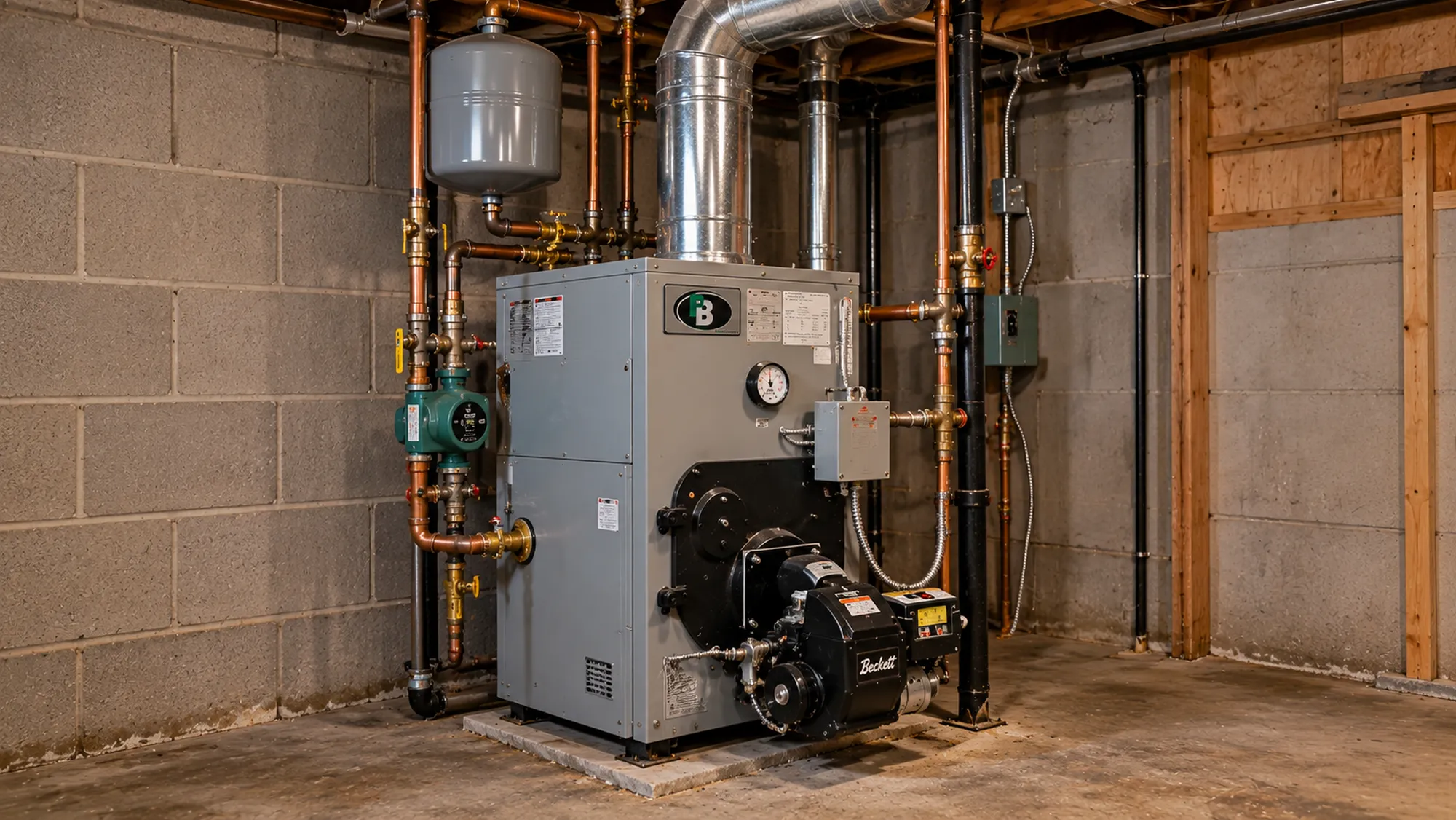
Oil Furnace Repair & Conversion
We service, repair, and replace oil furnaces and boilers, and we handle conversions to a heat pump or natural gas when that makes more sense. We’ll lay out the numbers and let you decide.
Before you replace anything
Oil furnaces are mechanically simple and durable. Plenty of the ones we work on are twenty-five and thirty years old and still heating the house properly, because they were built to. The most common reasons they stop working are a dirty or failed nozzle, a bad igniter or transformer, a clogged filter, a sooted heat exchanger, or a control problem, all of which are service, not replacement.
What tends to happen instead is that a homeowner calls three companies, two of them don’t service oil at all, and the third quotes a conversion. That’s a sales pitch, not a diagnosis.
We’ll tell you what’s actually wrong with it. If it’s worth fixing, we’ll fix it. If converting is the better long-term move, we’ll show you the math.
Just need it running again? Start with oil furnace repair
Here are some common signs, what they usually mean, and when it’s time to replace.
This one ends the conversation. A failed heat exchanger can’t be repaired, and on an oil furnace it means combustion products where they shouldn’t be. We’ll show you before we recommend anything.
Corroded tanks, weeping fittings, and buried lines of unknown age are their own category of problem. Sometimes the furnace is fine and the fuel system is the reason to reconsider the whole setup.
Oil equipment from manufacturers who have exited the market can reach a point where keeping it running stops being practical. We’ll be honest when we get there.
An oil furnace that soots up quickly after every service is telling you something about combustion, and past a certain age the fix isn’t another tune-up.
This is the economic sign rather than the mechanical one. If you’re filling a tank several times a winter and a heat pump would carry the same house for less, that’s worth pricing, with real numbers, not a brochure.
Your Options
There’s no universally right answer here, and we’re suspicious of anyone who tells you there is. Oil isn’t obsolete, gas isn’t always available, and a heat pump isn’t automatically cheaper for every house. What matters is your equipment’s condition, your fuel costs, your electrical service, whether gas is even on your street, and how long you plan to be there. We’ll walk all three, with your actual numbers.
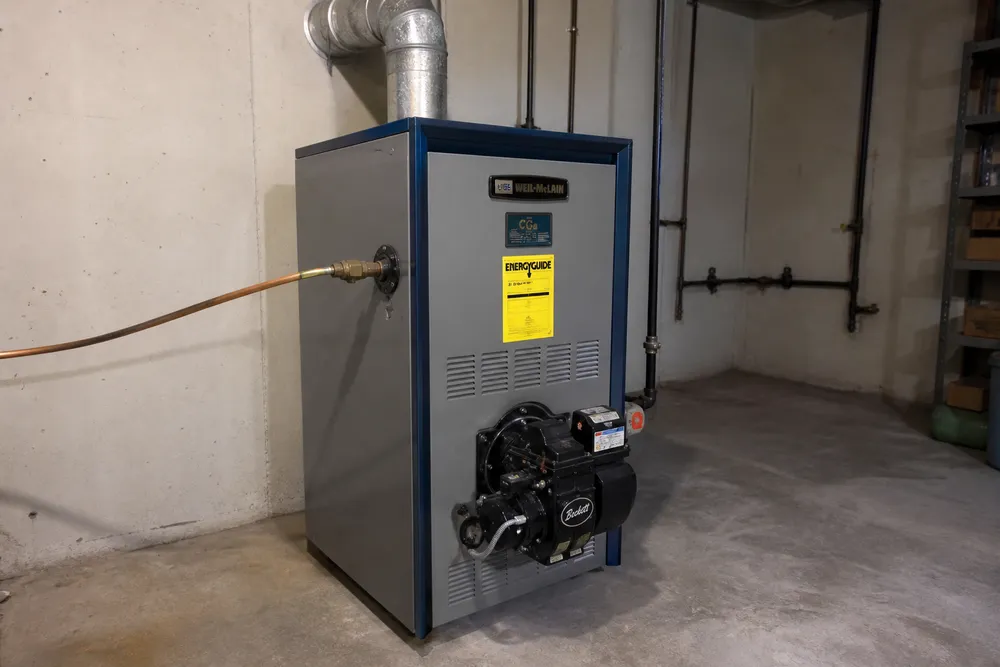
Repair or replace the oil equipment and keep the system you have. The right answer more often than people are told, especially when the furnace is sound and the fuel system is in good condition.
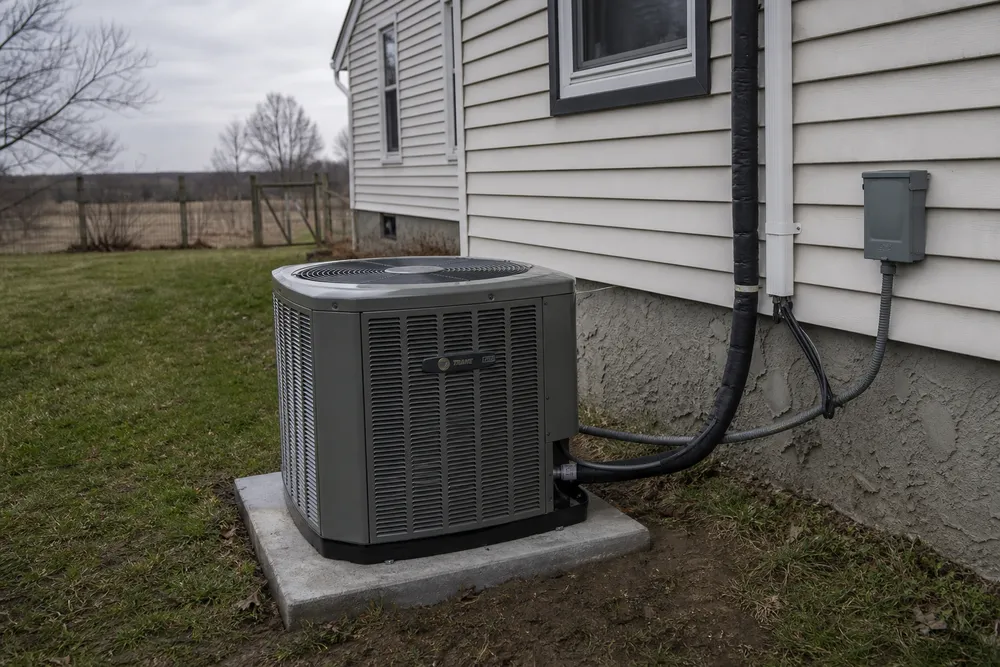
One system for heating and cooling, no fuel deliveries, and strong efficiency in our mild winters. Requires adequate electrical service and duct evaluation.
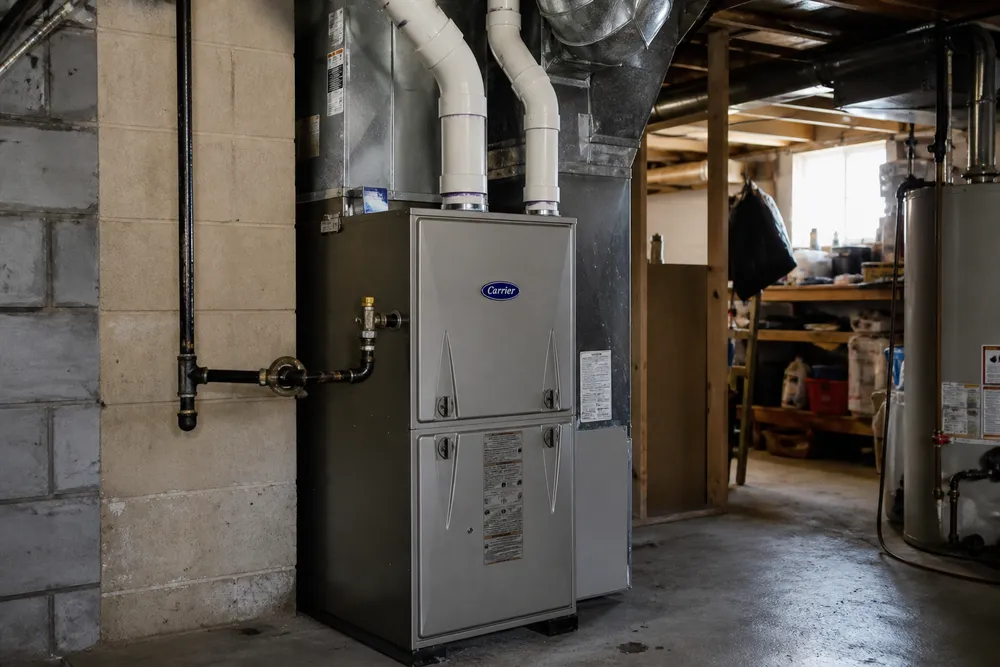
Lower operating cost than oil in most cases, and no tank. Only possible where gas service actually reaches your property, which often isn’t the case in rural Suffolk and Isle of Wight. We verify before we quote.
What We Work On
Oil heat has become a specialty by attrition: companies stopped training on it, stopped stocking parts for it, and stopped taking the calls. We didn’t. That means we can diagnose what you have before anyone starts talking about replacing it.
Nozzles, igniters, transformers, pumps, filters, controls, and combustion adjustment. The routine service that keeps sound equipment running.
New oil equipment when the furnace is done but oil still makes sense for the property.
Hydronic oil systems, radiators, and the distribution around them.
Boilers, Radiators & Apollo SystemsComplete changeover including load calculation, electrical coordination, and duct evaluation.
Where utility service is verified available. Gas line, venting, and connections handled under our own Master Gas Fitter license.
Assessment of tanks and lines, and coordination of removal or abandonment when converting.
Load Calculation & Conversion Sizing
A lot of conversions are sized by matching the BTU rating on the old oil furnace. That’s a guess, and on a conversion it’s a worse guess than usual: oil furnaces were routinely oversized when they were installed, so matching that number carries a thirty-year-old mistake into new equipment.
We run a load calculation on the house first: square footage, insulation, windows, ductwork, and how the place is actually built. Then, if you’re converting to a heat pump, we check your electrical service, because a conversion that needs a panel upgrade should be priced with the panel upgrade in it rather than discovered halfway through.
And if the ductwork was built for an oil furnace’s airflow, that gets evaluated too. Heat pumps move more air at lower temperatures, and duct that was adequate for oil heat sometimes isn’t.
Our Process
Every replacement includes all of it. No line items that show up later as extras.
Before we order anything
A real look at the existing equipment, the heat exchanger, the tank, and the fuel lines, so the conversation starts with facts about your system rather than assumptions about oil.
Load calculation on the house, electrical service checked, gas availability verified if that’s on the table, and operating costs compared across the options. Permit pulled and inspection scheduled.
The day it goes in
Old furnace out and disposed of properly, fuel lines safely capped, and tank removal or abandonment coordinated where it applies.
New system set and connected, gas connections leak-tested or refrigerant charge verified as applicable, venting confirmed, airflow checked, and every mode tested.
Before we pull out
Filed for you. Most manufacturers require it, and most people never get around to it.
How the new system runs, what it needs, what changes about your winter, and your questions answered before we leave.
The Numbers, plainly
The honest answer is that it depends on your house, and anyone who gives you a universal answer is selling something. Oil delivers a lot of heat per gallon and a well-maintained oil furnace is a capable machine. What makes conversion attractive isn’t that oil is bad. It’s that oil prices move, deliveries have to be scheduled, and a heat pump gives you cooling from the same system you’re already paying to install.
The math turns on a handful of things: what you actually spend on fuel in a winter, the condition of your existing equipment and tank, whether your electrical panel can carry a heat pump without an upgrade, whether gas service reaches your street at all, and how many more winters you plan to be in the house. Conversions pay back over years, so someone selling in three doesn’t have the same answer as someone staying twenty.
We’ll put your numbers into that instead of a national average, and if the answer is that you should keep your oil furnace and spend the money on ductwork, we’ll tell you that too.
Testimonials
Mike was very professional and thorough throughout the entire process. Haven’t felt with any HVAC service before Ductman and will never choose anything else now. Thank you for a great experience.

 Robert Clark
 Google review
Everyone was respectful, a pleasure to work with, and they got the job done in a timely fashion with a great quality of work. My house heats even better now than before. 10/10 I absolutely recommend them.
 James Maurmeier
Google review
Furnace went out on what seems like the coldest day so far this year. Chris answered our call and promptly sent out a technician to review the issue and provide an estimate. They were able to order and install the part quickly for a reasonable price. I would definitely call them again if we had another HVAC issue.
 Charisse
Google review
Our Work
Service Area
Oil is address-specific rather than area-wide, but it concentrates in the rural and older parts of the region, and those are the areas most companies have quietly stopped driving to. We serve them.
plus Smithfield, Windsor, Carrollton, and rural Isle of Wight.
A new system is rarely a purchase anyone planned for. Financing is available, and we offer a cash discount if you’d rather not finance. We’ll lay out both so you can see the real difference.
FAQ
We do. It’s become a specialty by attrition. Most companies stopped training on oil and stopped stocking parts, which is why people have trouble finding service.
It depends on your house. The math turns on what you spend on fuel in a winter, the condition of your equipment and tank, whether your panel can carry a heat pump without an upgrade, whether gas reaches your street, and how long you’ll stay, since conversions pay back over years. We’ll run your actual numbers, and if keeping the oil furnace is the better answer, we’ll say so.
Only where gas service actually reaches your property, which often isn’t the case in rural Suffolk and Isle of Wight. We verify availability before we quote, and handle the gas line, venting and connections under our own Master Gas Fitter license.
A long time when it’s maintained. Plenty of the ones we work on are twenty-five and thirty years old and still heating the house properly. A cracked heat exchanger, a failing tank or lines, or parts that can no longer be sourced are what usually end it.
We assess the tank and lines, safely cap the fuel lines, and coordinate tank removal or abandonment where it applies.
It needs a look. A sooted heat exchanger is often a service problem, but an oil furnace that soots up quickly after every service is telling you something about combustion, and past a certain age, the fix isn’t another tune-up.
Yes. Hydronic oil systems, radiators, and the distribution around them. See Boilers, Radiators & Apollo Systems.
Yes. Financing is available, and we offer a cash discount if you’d rather not finance. We’ll lay out both so you can see the real difference.
Get Started
Whether that turns out to be a repair, new oil equipment, or a conversion that pays for itself, you’ll get a straight answer and your options in plain English.