One room is always wrong
The back bedroom, the room over the garage, the addition. If a room runs consistently hotter or colder than the thermostat says, the air isn’t reaching it in the volume it needs.
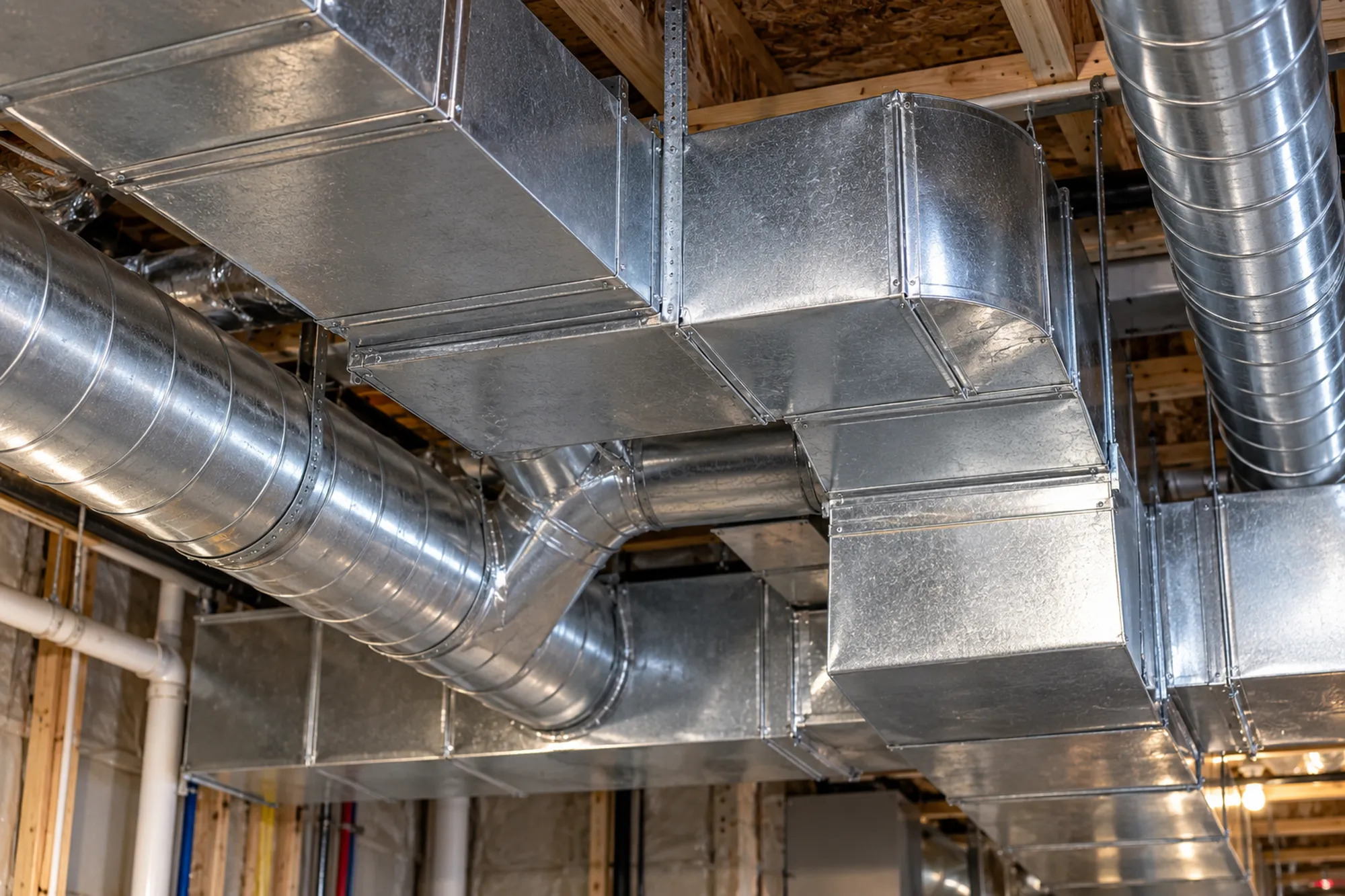
Ductwork Replacement & Installation
We design, build, and install new duct systems for homes throughout Hampton Roads. If rooms won’t cool evenly or the airflow is weak, we’ll find out why and fix it the right way.
Before you replace anything
A house that won’t cool evenly has two possible culprits, and they get confused constantly. Undersized or failing equipment feels like a duct problem. Leaking, crushed, or badly designed ductwork feels like an equipment problem, which is how people end up buying a new system that doesn’t fix anything.
We diagnose both, because we work on both. That means we have no reason to sell you duct replacement when your real issue is a failing compressor, and no reason to sell you a new system when the air is escaping into your crawlspace before it ever reaches the room.
Sometimes the answer is sealing and a few corrections rather than a full replacement. You’ll hear that too.
Just need a repair? Start with ductwork repair
Here are some common signs, what they usually mean, and when it’s time to replace.
The back bedroom, the room over the garage, the addition. If a room runs consistently hotter or colder than the thermostat says, the air isn’t reaching it in the volume it needs.
Hold your hand over a vent. If the air is barely moving in a room that should be well served, the duct feeding it is undersized, crushed, disconnected, or leaking before it gets there.
Uninsulated or poorly sealed duct in a humid crawlspace condenses. That water damages the duct, the insulation, and eventually the framing around it.
Air pulled through a damp crawlspace or a duct with wet insulation carries that smell into the house. The system isn’t making the odor; it’s distributing it.
Duct leakage can put a meaningful share of your conditioned air somewhere you’re not standing. You pay to cool the attic, and the house never quite catches up.
Ductwork Path
Not every duct problem needs a new system. A disconnected run, a section of crushed flex, or leaking joints can often be corrected for a fraction of what full replacement costs. What matters is whether the underlying design is sound.
When the trunk lines are undersized, the returns are inadequate, or the layout was wrong from the day the house was built, patching it just buys time. We’ll tell you which one you’re looking at, and we’ll tell you honestly: a redesign is a bigger job for us, and we’d still rather you spend the money where it works.
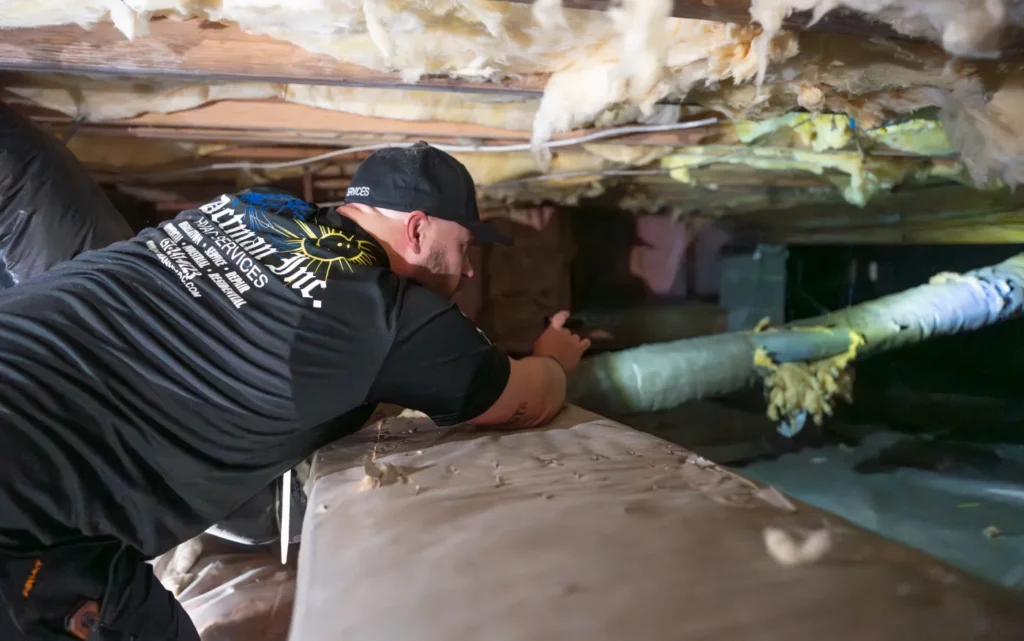
Design is sound
Reconnecting runs, replacing damaged sections, sealing joints, adding insulation, and balancing what’s already there. The right answer when the design is sound and the execution failed.
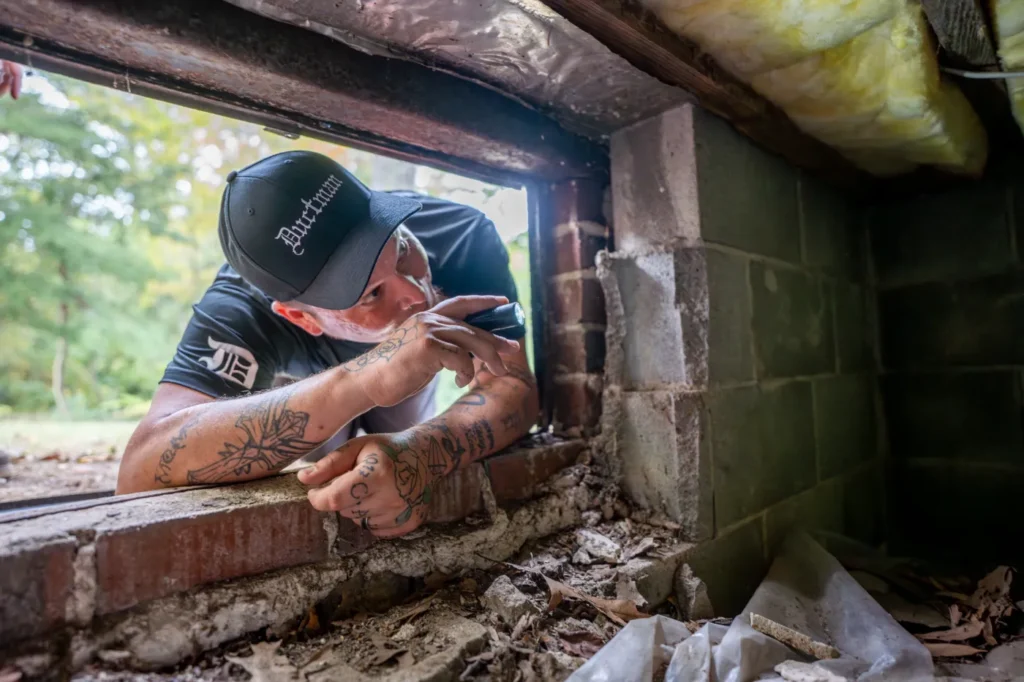
Design was wrong
A new duct system designed for your house: trunk sizing, branch layout, return air, and register placement worked out properly. The right answer when the original was never going to work.
What We Build
Ductwork isn’t a product you order out of a catalog. It’s fabricated and assembled for the building it serves, which is why the quality varies so much between contractors, and why so much of what we replace was installed wrong the first time.
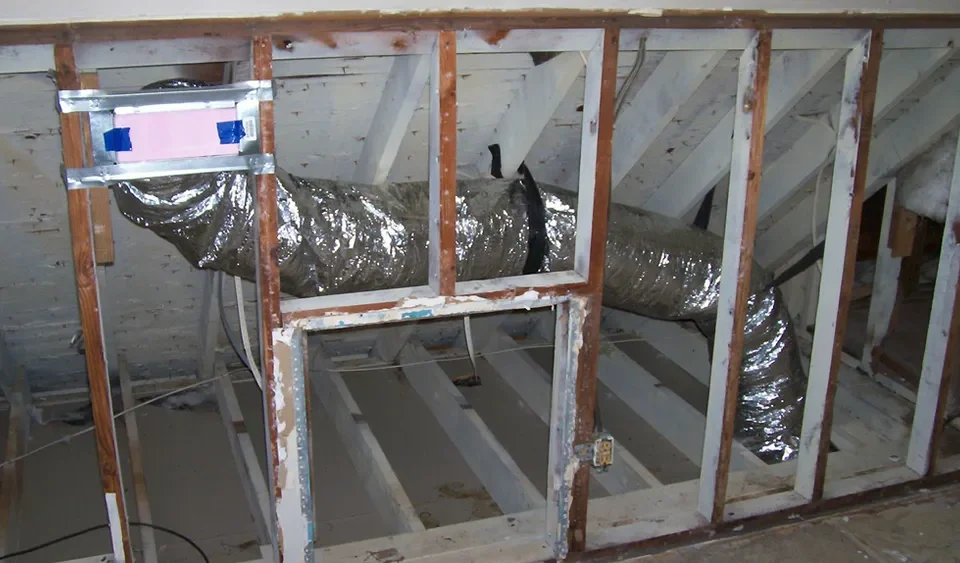
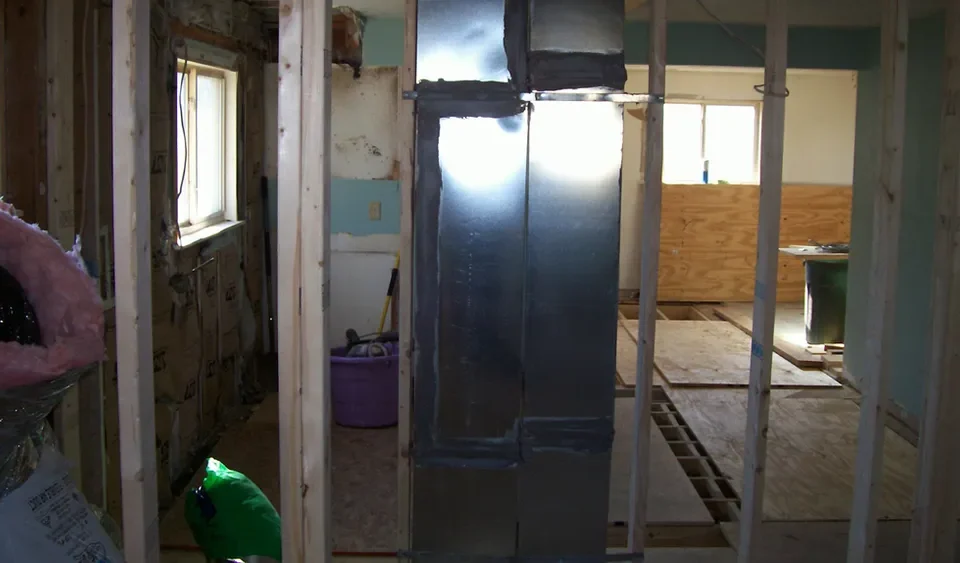
Sheet metal main lines with properly sized takeoffs. More durable, better airflow, and far less prone to the crushing and disconnection that plagues flex runs.
Flex has a bad reputation because it’s usually installed badly: kinked, sagging, run too long, compressed around corners. Installed properly and supported correctly, it has a legitimate place.
The most commonly undersized part of any residential duct system. If a system can’t pull air back, it can’t push it out, and adding return capacity often fixes rooms nothing else did.
Correcting systems where the main lines were never sized for the equipment, or where additions were tied in without recalculating anything.
Mastic-sealed joints, properly insulated runs for crawlspace and attic, and hangers that keep duct off the ground and out of standing water.
Adjusting the system so every room gets what it’s supposed to, rather than the rooms nearest the equipment taking everything.
Our Brands

























































Load calculation & sizing
A lot of ductwork gets replaced by matching what was there. Same routes, same sizes, same returns, which means whatever was wrong the first time gets rebuilt in new material.
We run a Manual J load calculation to find out how much air each room actually needs, then a Manual D duct design to size the trunks, branches, and returns to deliver it. That’s the difference between a duct system and a network of tubes. Undersized trunk lines choke the equipment no matter how good the equipment is. Inadequate return air means the system starves itself. Long, poorly routed branches lose static pressure before the air arrives.
Every one of those problems looks like a broken air conditioner from inside the house.
Just need a repair? AC Repair
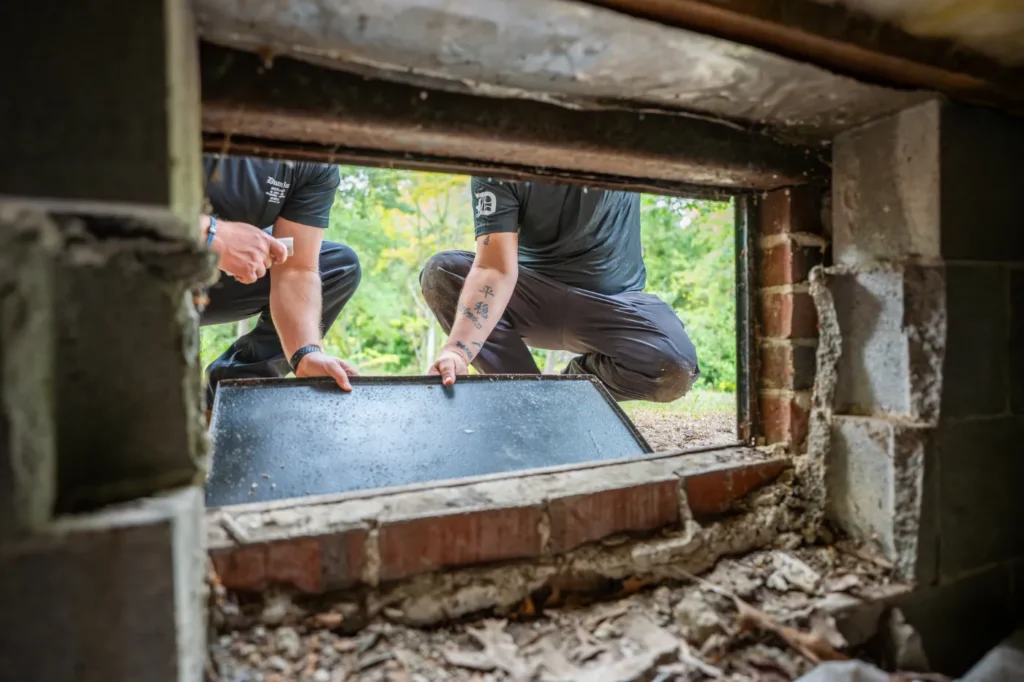
Our Process
Every duct project includes all of it. No line items that show up later as extras.
Before we order anything
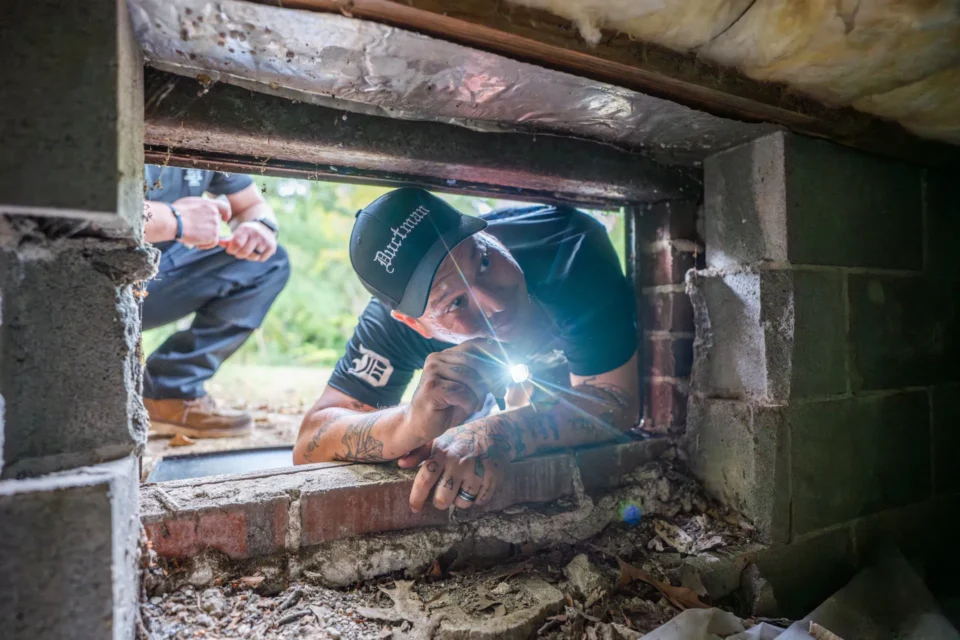
Crawlspace, attic, wherever it runs. We inspect the existing system, measure static pressure and airflow, and find out what’s actually failing before we design anything. Photos of what we find, so you see it too.
Load calculation per room, then duct design sized to deliver it. Trunk sizing, branch layout, return air, and register placement worked out on paper before anything gets cut.
The day it goes in
Old duct, damaged insulation, and debris out of the crawlspace or attic. Nothing left behind to hold moisture.
Fabricated to the design, sealed at every joint, insulated to spec, and properly supported so it stays off the ground and holds its shape.
Before we pull out
Airflow measured and adjusted room by room, so the rooms that were always wrong actually get what they need.
What changed, what to expect, and your questions answered before we leave.
Duct leakage, plainly
Duct systems leak. In a typical home with duct running through a crawlspace or attic, a meaningful share of the air your equipment conditions never reaches a room. It escapes through unsealed joints, disconnected runs, and gaps at the takeoffs, and you paid to heat or cool all of it.
That’s the part people miss when they compare efficiency ratings. A 96% furnace or a high-SEER2 heat pump is rated on what it produces, not on what arrives. Put a premium system on a leaking duct network and you’ve bought efficiency you don’t get to use.
Which is the whole reason we tell people to fix the ducts before they upgrade the equipment. It’s a smaller job, it’s less money, and in a lot of houses it’s the one that actually changes how the place feels.
Testimonials
Mike was very professional and thorough throughout the entire process. Haven’t felt with any HVAC service before Ductman and will never choose anything else now. Thank you for a great experience.

 Robert Clark
 Google review
Everyone was respectful, a pleasure to work with, and they got the job done in a timely fashion with a great quality of work. My house heats even better now than before. 10/10 I absolutely recommend them.
 James Maurmeier
Google review
Furnace went out on what seems like the coldest day so far this year. Chris answered our call and promptly sent out a technician to review the issue and provide an estimate. They were able to order and install the part quickly for a reasonable price. I would definitely call them again if we had another HVAC issue.
 Charisse
Google review
Our Work
A new system is rarely a purchase anyone planned for. Financing is available, and we offer a cash discount if you’d rather not finance. We’ll lay out both so you can see the real difference.
FAQ
It depends on the size of the house, how much duct is being replaced, and how hard the space is to work in. A crawlspace with two feet of clearance and standing water is a different job than a walk-in attic. We’ll give you a real figure after we’ve been under the house.
They get confused constantly. Failing equipment feels like a duct problem, and leaking or badly designed ductwork feels like an equipment problem. We diagnose both, because we work on both, measuring static pressure and airflow before we recommend anything. One room that’s always wrong, weak airflow at the registers, sweating ducts, a musty smell, or high bills on a system that isn’t old all point toward the ducts.
Often, yes. A disconnected run, a section of crushed flex, or leaking joints can usually be corrected for a fraction of what full replacement costs. It comes down to whether the underlying design is sound. If the trunks are undersized or the layout was wrong from the start, patching it just buys time.
Not when it’s installed properly. Flex has a bad reputation because it’s usually installed badly: kinked, sagging, run too long, compressed around corners. Installed properly and supported correctly, it has a legitimate place.
Yes. Uninsulated or poorly sealed duct in a humid crawlspace condenses, and that water damages the duct, the insulation, and eventually the framing around it.
Yes. Crawlspace, attic, wherever the duct runs. We inspect it, photograph what we find so you see it too, and remove old duct, damaged insulation and debris so nothing is left behind to hold moisture.
Yes. Financing is available, and we offer a cash discount if you’d rather not finance. We’ll lay out both so you can see the real difference.
Get Started
Whether the answer turns out to be a duct correction, a redesign, or an equipment problem nobody’s mentioned yet, you’ll get a straight answer and your options in plain English.