Your unit is 20-25+ years old
Geothermal equipment outlasts conventional heat pumps because it isn’t sitting outside in the weather. Past twenty years, though, parts get scarce and efficiency falls well behind current equipment.
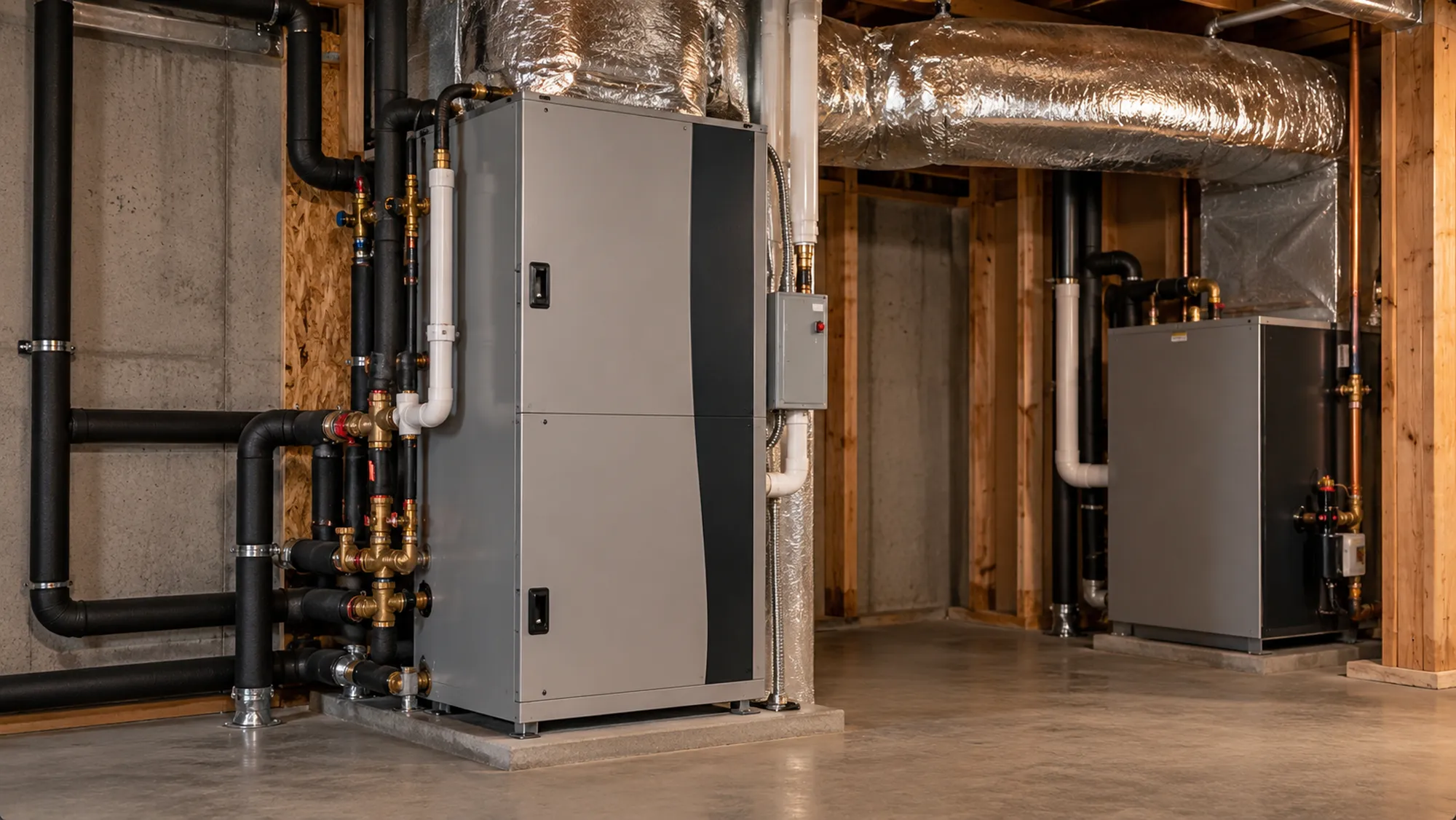
Geothermal Replacement
Your ground loop can last fifty years or more, but the heat pump connected to it won’t. When the unit fails, we replace the equipment and keep the loop field you already paid for.
Before you replace anything
Geothermal systems have two halves, and they fail very differently. The heat pump inside your house is a machine with a compressor, a blower, and controls. It wears out on roughly the same schedule as any other equipment. The loop field buried in your yard is inert pipe, and it usually outlives everything attached to it.
When a geothermal system stops performing, the problem is almost always the indoor unit, a circulating pump, a control board, or a flow issue, not the loop. But because so few contractors work on this equipment, homeowners get told the whole system is done and quoted a conventional replacement instead.
We diagnose the equipment and the loop separately. If your loop is intact, you should be putting your money into the part that actually failed.
Not sure it needs replacing? Start with geothermal repair
Here are some common signs, what they usually mean, and when it’s time to replace.
Geothermal equipment outlasts conventional heat pumps because it isn’t sitting outside in the weather. Past twenty years, though, parts get scarce and efficiency falls well behind current equipment.
On a geothermal unit this is the expensive repair, and on older equipment it often costs enough that putting the money toward a new unit, on your existing loops, is the better call.
Older units from manufacturers that have exited the market can become unserviceable. We’ll tell you when we’ve hit that wall rather than stringing out repairs.
Geothermal should be the cheapest heating and cooling you can own. When the bills start looking like a conventional system’s, something has degraded.
Not a mechanical sign, but a real one. Systems that have gone years without proper service accumulate problems, and at some point the deferred maintenance outweighs the equipment’s remaining life.
Replacement Path
In most cases this is straightforward: the loop stays, the equipment gets replaced, and you keep the advantage you invested in years ago. That’s the outcome we’re aiming for, and it’s achievable far more often than people are told.
Occasionally it isn’t. Loops installed poorly, damaged by excavation, or undersized for a house that’s since been added onto can need work. We’ll test the loop before we make that call, and we’ll show you the results, because “you need a whole new system” is an expensive sentence and it deserves proof.
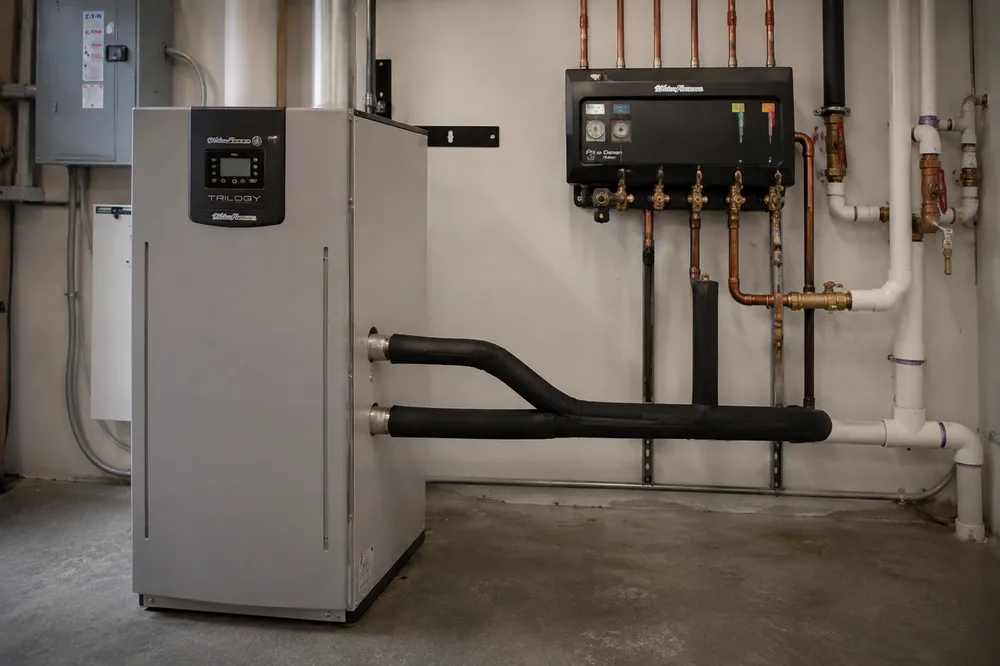
Loop tests sound
A new geothermal heat pump connected to your existing loop field. Modern efficiency, current parts availability, and none of the excavation cost. The right answer for most systems we look at.
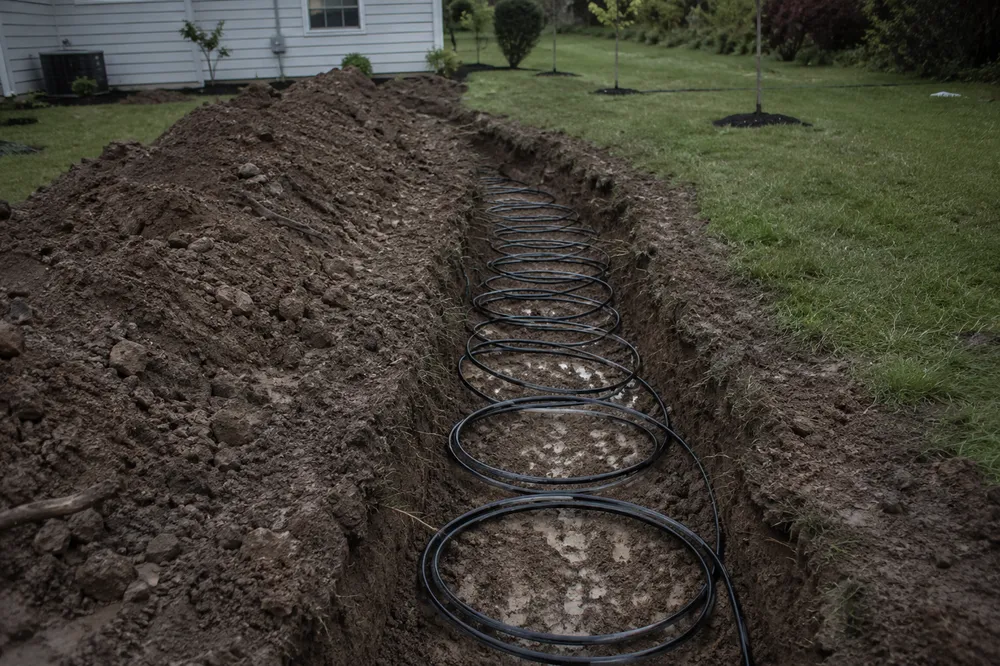
Loop is compromised
When testing shows the loop itself is compromised. We’ll lay out what loop repair or replacement involves, and price a conventional heat pump alongside it so you can compare honestly.
What We Install
Geothermal is a small enough category that most HVAC companies never develop the experience to service it: the equipment is different, the hydronics are different, and the diagnostics don’t look like conventional HVAC. We’ve been working on these systems for two decades, alongside the ductwork and conventional equipment they connect to.
The most common residential configuration. New equipment matched to your existing loop field and duct system.
Geothermal feeding hydronic distribution, radiant floors, or a combination. Less common, and considerably less commonly serviced.
The components that move fluid through the loop. A frequent point of failure, and frequently misdiagnosed as an equipment problem.
The component that uses waste heat from the system to preheat your domestic hot water. Often the first thing to quietly stop working, and often nobody notices for years.
Geothermal controls differ from conventional HVAC, and control failures routinely get mistaken for a dead compressor.
A geothermal system distributes air through the same ducts as anything else. If the ducts are the constraint, new equipment won’t fix it.
Load calculation & sizing
It’s common to size a replacement by matching the tonnage on the old unit. With geothermal there’s a second constraint that makes that especially risky: the equipment has to match the loop field as well as the house.
We run a load calculation on the house, then check it against what your loop can actually deliver. A unit that’s too large for the loop will pull more heat out of the ground than the field can recover, and performance falls off as the season goes on, which feels like a broken system and gets diagnosed as one. Undersized, and you’re leaving capacity in the ground that you already paid to install.
If the house has been added onto since the loop went in, that’s a real conversation, and it’s better to have it now than after the equipment is set.
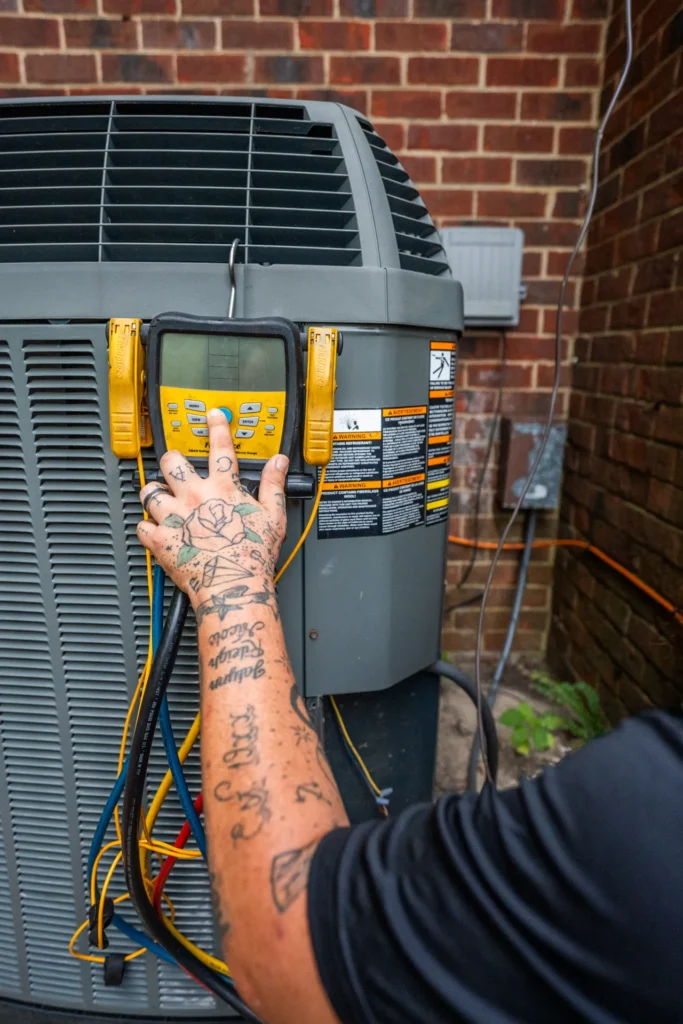
Our Process
Every replacement includes all of it. No line items that show up later as extras.
Before we order anything
Flow rate, pressure, and temperature differential, so we know what the field is actually delivering before we size anything. You’ll see the numbers.
Load calculation per room, ductwork assessed, and the equipment matched to both the house and the loop. Permit pulled and inspection scheduled.
The day it goes in
Old equipment out and disposed of properly, refrigerant recovered, loop connections capped and protected while we work.
New unit set, loop connections made and purged of air, refrigerant charge verified, airflow checked, and both heating and cooling modes tested.
Before we pull out
Filed for you. Most manufacturers require it, and most people never get around to it.
How the system runs, what the flow center does, what maintenance it actually needs, and your questions answered before we leave.
Geothermal, plainly
A geothermal system doesn’t burn anything or fight the outdoor air. It moves heat between your house and the ground, which sits at a stable temperature year-round regardless of what the weather is doing. That’s why geothermal outperforms conventional equipment in both January and August. It’s working against a ground temperature in the upper fifties instead of a twenty degree morning or a ninety-five degree afternoon.
The loop field that makes that possible is the largest single cost in a geothermal installation, and it’s also the most durable part of the system. Buried polyethylene pipe has no moving parts, nothing to corrode, and a service life measured in decades. The heat pump connected to it is a machine, and machines wear out.
So when the equipment fails on a twenty-year-old geothermal system, the honest question isn’t whether geothermal was worth it. It’s whether anyone is going to tell you that you only need to replace half of it.
Testimonials
Mike was very professional and thorough throughout the entire process. Haven’t felt with any HVAC service before Ductman and will never choose anything else now. Thank you for a great experience.

 Robert Clark
 Google review
Everyone was respectful, a pleasure to work with, and they got the job done in a timely fashion with a great quality of work. My house heats even better now than before. 10/10 I absolutely recommend them.
 James Maurmeier
Google review
Furnace went out on what seems like the coldest day so far this year. Chris answered our call and promptly sent out a technician to review the issue and provide an estimate. They were able to order and install the part quickly for a reasonable price. I would definitely call them again if we had another HVAC issue.
 Charisse
Google review
Our Work
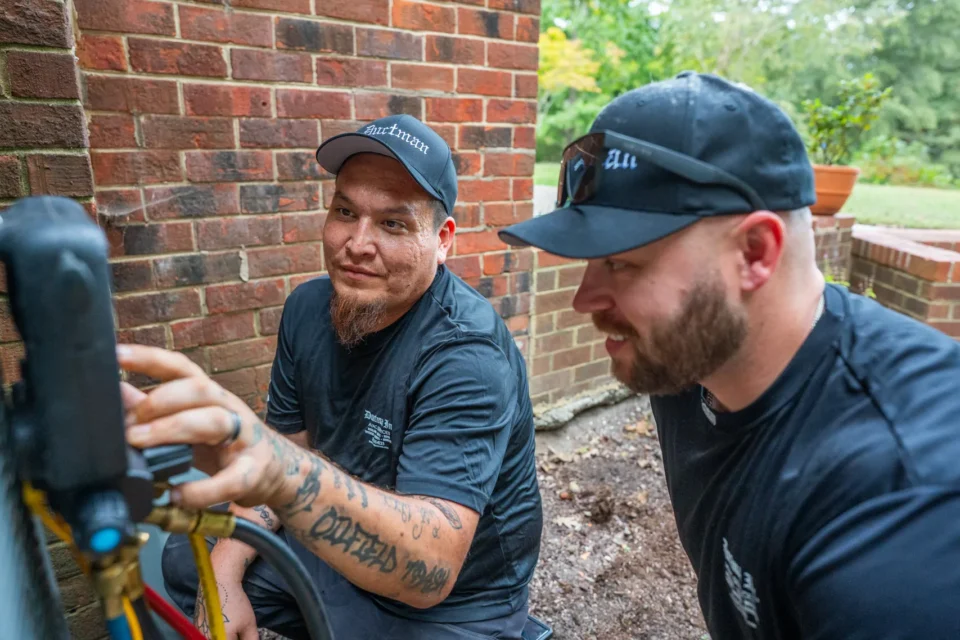
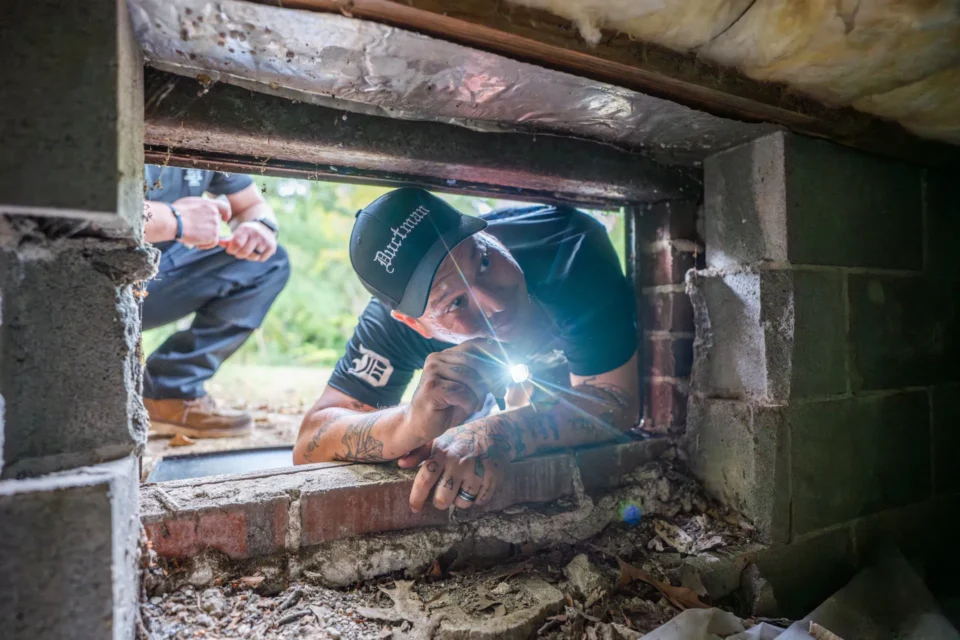
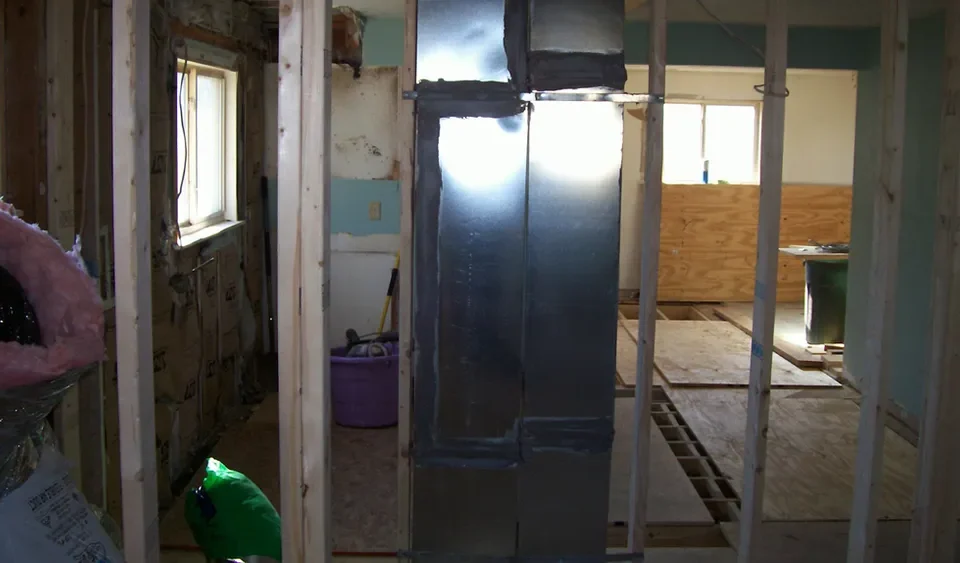
A new system is rarely a purchase anyone planned for. Financing is available, and we offer a cash discount if you’d rather not finance. We’ll lay out both so you can see the real difference.
FAQ
In most cases, yes. The loop field is the buried part, and it typically outlasts several generations of equipment. We test the loop first, but the usual outcome is new equipment on existing loops with no excavation.
It depends mainly on whether your loop can be reused. New equipment on an existing, sound loop avoids the excavation cost entirely. We test the loop and run a load calculation first, then give you the numbers; if the loop is compromised we price a conventional heat pump alongside so you can compare honestly.
A ground loop can last fifty years or more. Buried polyethylene pipe has no moving parts, nothing to corrode, and a service life measured in decades. It usually outlives the equipment attached to it.
Yes. We’ve been working on geothermal systems for two decades, alongside the ductwork and conventional equipment they connect to.
We diagnose them separately. When a geothermal system stops performing, it’s almost always the indoor unit, a circulating pump, a control board or a flow issue, not the loop. We test the loop’s flow rate, pressure and temperature differential and show you the numbers.
Geothermal outperforms conventional equipment in both January and August, because it works against a steady ground temperature in the upper fifties. And if your loop is sound, the most expensive part is already paid for. You’d only be replacing the equipment.
Yes. Financing is available, and we offer a cash discount if you’d rather not finance. We’ll lay out both so you can see the real difference.
Get Started
Whether it turns out to be the unit, a pump, the controls, or something in the loop, you’ll get a straight answer and your options in plain English, including the option that costs you less.