Skip to content

Package Unit Replacement & Installation

Package unit replacement, sized for the house it serves.

Package units hold the whole system in one outdoor cabinet. They’re common in manufactured homes, older construction, and houses without room for indoor equipment. We size them properly, install them right, and tell you honestly when a repair will do.

  • Serving Hampton Roads since 2003
  • 20+ years experience
  • Master HVAC licensed
  • Master Gas licensed
  • Class A contractor
  • Financing available

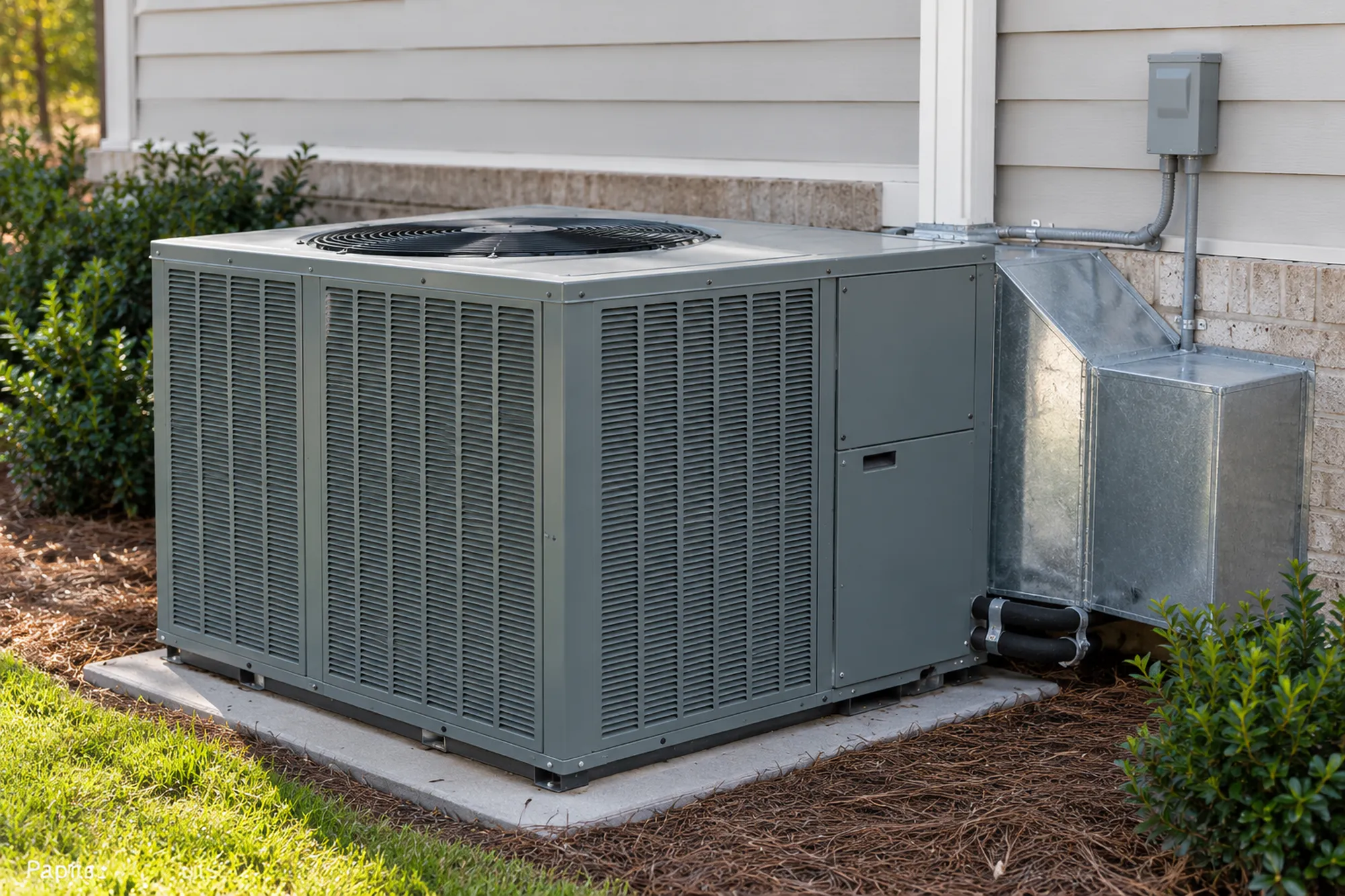
Which one do you have?

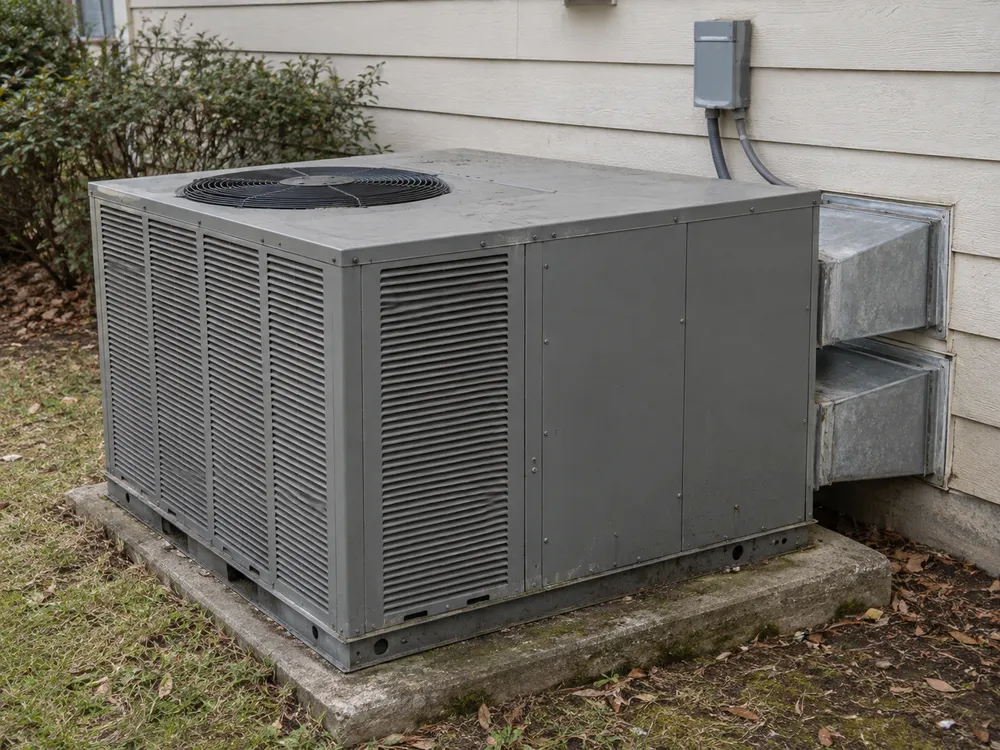
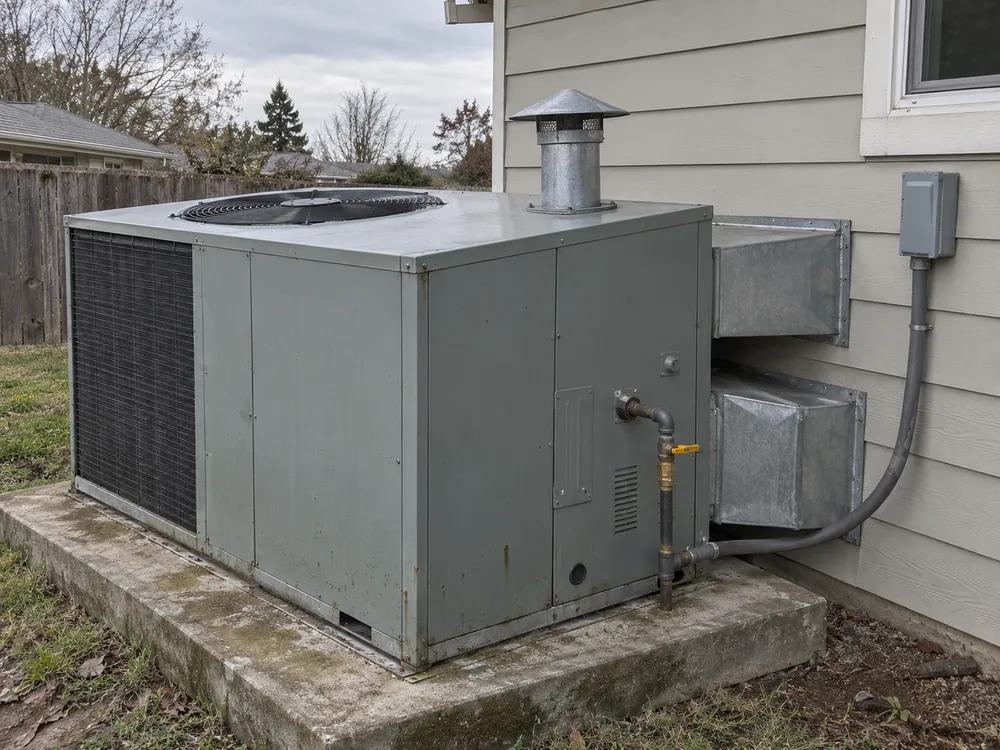
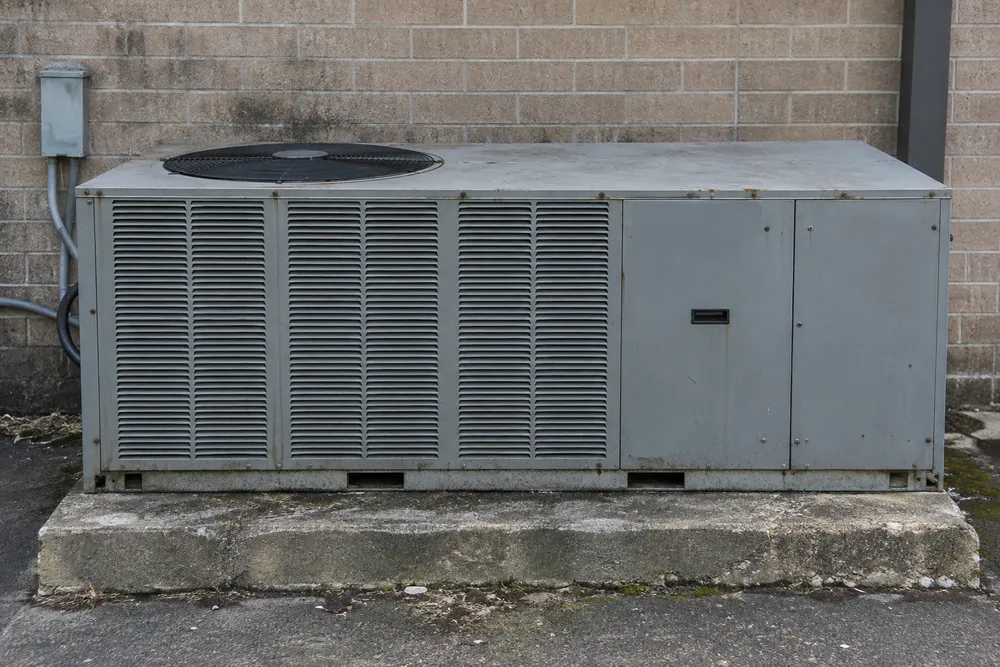
Is this what’s outside your house?

Package units go by several names and come in a few configurations. If one of these looks like yours, you’re in the right place, and if you’re not sure, send us a photo and we’ll tell you.

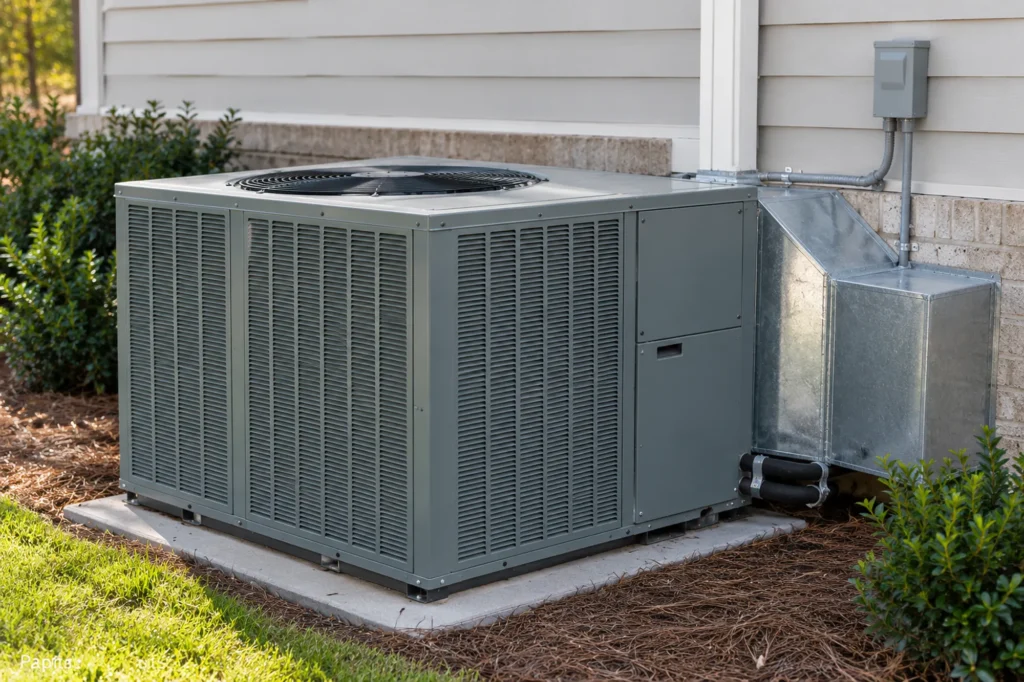
  • Packaged heat pump on a concrete pad

    Packaged heat pump

    Heating and cooling from one outdoor cabinet, no gas. Common in manufactured homes and all-electric houses.

  • Gas pack unit with flue beside a house

    Gas pack

    A packaged unit with a gas furnace inside for heat and electric cooling. If you have gas service and one outdoor box, this is likely yours.

  • Packaged air conditioner on a pad

    Packaged air conditioner

    Cooling only, with heat handled separately or not at all. Less common residentially, more common in light commercial.

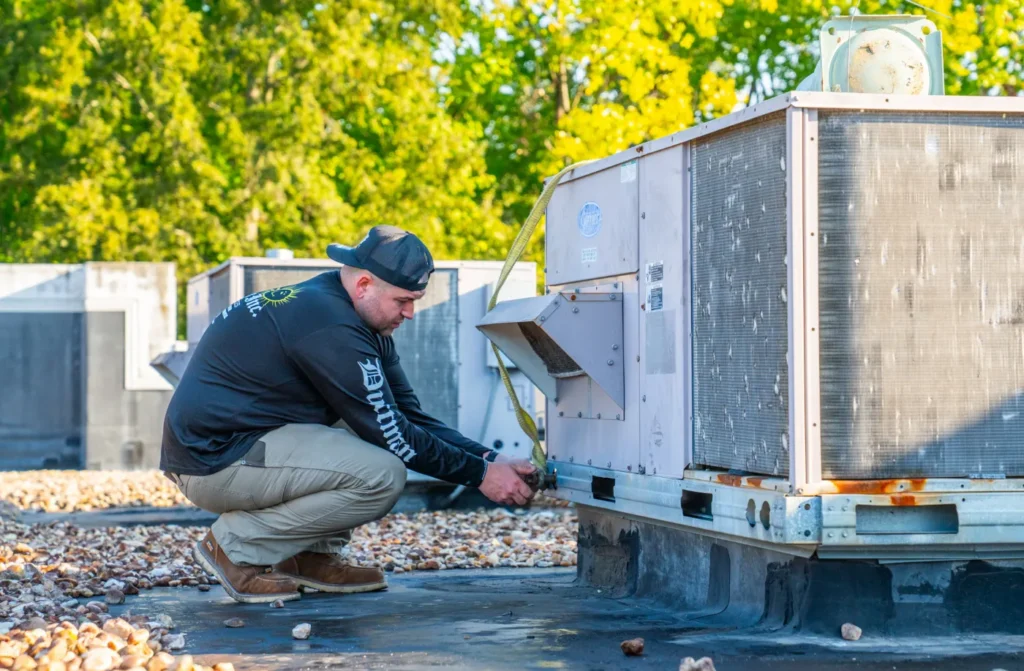
  • Ductman HVAC technician servicing a rooftop condenser

    Rooftop unit

    The same equipment mounted on a flat roof rather than a pad. Mostly commercial, occasionally residential.

    Commercial HVAC

Before you replace anything

Make sure your package unit is actually done.

Package units often get condemned faster than they should be, and it isn’t always about the equipment. They’re common in manufactured homes and older properties, which means the service call is often quick, the diagnosis is shallow, and “you need a new one” is the fastest way to wrap up a service call in July.

A failed blower motor, a bad control board, a leaking coil, or a duct connection that came apart under the house all look like a dead unit from inside. We find out what actually failed before we quote anything.

Not sure it’s dead? Start with HVAC repair

Five signs it’s actually time.

Here are some common signs, what they usually mean, and when it’s time to replace.

  1. The cabinet is rusting through

    Package units live outdoors in their entirety, including the parts that are indoors on a split system. In coastal Hampton Roads, cabinet corrosion is a real failure mode, and once the base pan or the heat exchanger compartment goes, the unit is done.
  2. It runs on R-22 refrigerant

    Production ended in 2020. These systems can still be serviced, but refrigerant costs have climbed steeply, which changes the math on any repair involving a leak. If your unit predates 2010, it’s worth checking.

  3. Your unit is 12-15+ years old

    Everything on a package unit is exposed to weather, salt air, and humidity. They generally don’t match the service life of a well-protected split system.

  4. The compressor or heat exchanger has failed

    On an older package unit, either of these often costs enough that putting the money toward replacement is the better use of it. We’ll show you both numbers.

  5. The duct connections underneath are shot

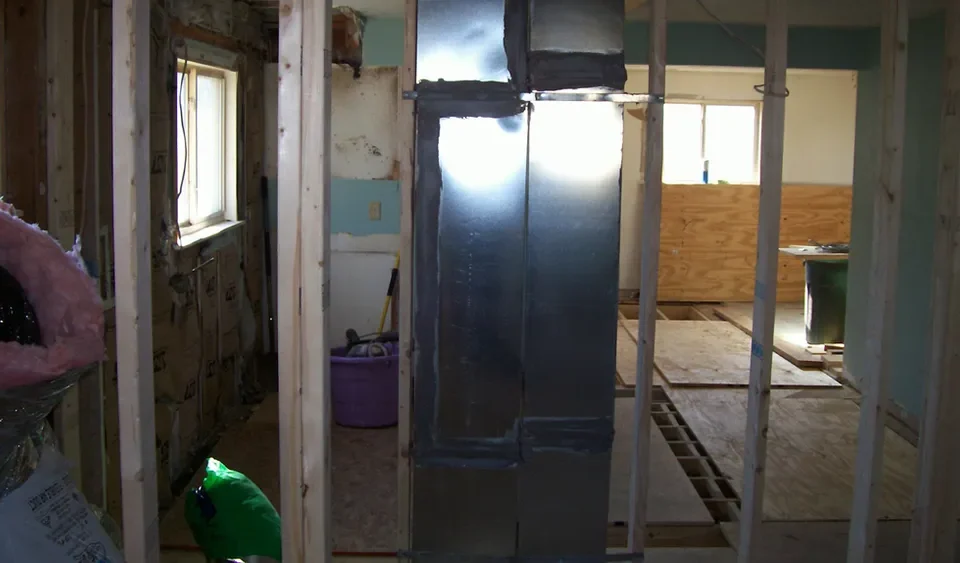
    On manufactured homes especially, the duct transition below the unit deteriorates and takes the system’s performance with it. Sometimes that’s the actual repair, and it’s worth knowing before you replace the whole cabinet.

Replacement Path

Package unit or split system?

Most of the time, replacing a package unit with a package unit is the right answer: the pad, the duct transitions, and the electrical are already set up for it, and changing configurations means changing all of that.

But not always. Houses that have been added onto, or that now have space for indoor equipment, sometimes do better on a conventional split system. It’s a bigger job up front and it isn’t the right call for most properties, but it’s worth knowing whether it applies to yours before you commit.

  • Residential package unit installed on a pad beside a home

    Direct replacement

    New package unit

    Direct replacement on the existing pad and duct transitions. Lower cost, shorter job, and no changes to the rest of the house. The right answer for most package unit properties.

    What we install
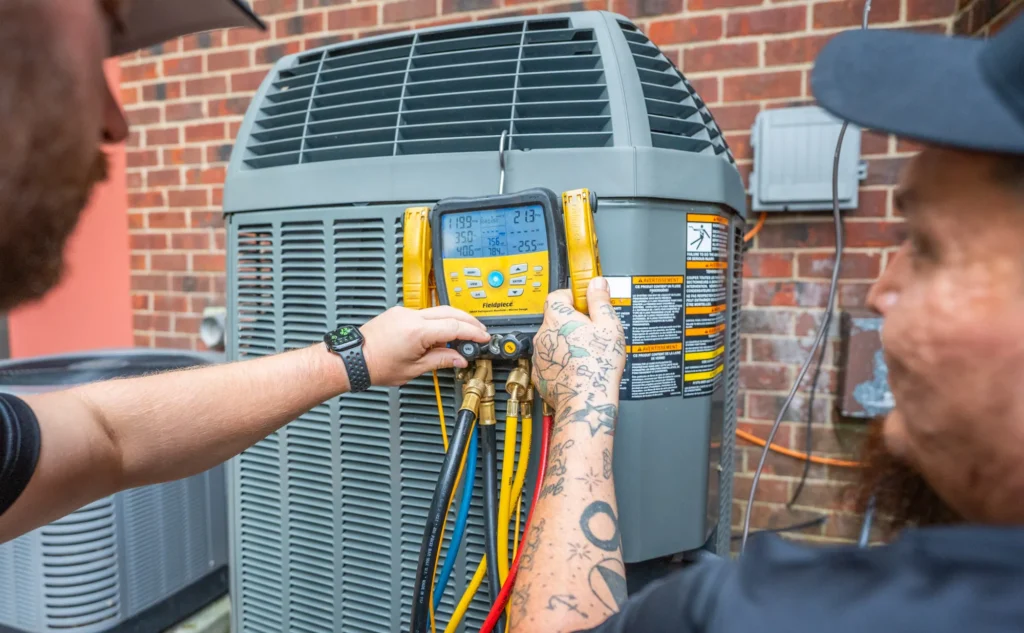
  • Technician reading refrigerant pressures on a residential heat pump

    Change of configuration

    Convert to a split system

    Splitting the system between an outdoor condenser and indoor equipment. Better protected, often longer-lived, but it requires indoor space and new duct connections.

    AC Replacement

What We Install

New systems we install.

We install and service every major brand, and we’ve had our hands inside all of them for two decades. Package equipment gets less attention from most residential HVAC companies than split systems do, which is exactly why we’ve ended up as the ones who work on it.

Request service
  • Packaged heat pumps

    All-electric heating and cooling from a single outdoor cabinet. The most common residential package configuration in this area.

  • Gas packs

    Gas heat and electric cooling in one unit. We hold the Master Gas Fitter license, so the gas connections and venting are our work, not a subcontractor’s.

  • Packaged air conditioners

    Cooling-only equipment where heat is handled separately.

  • Manufactured and modular home systems

    Package equipment with the duct transitions, crossover connections, and clearances these homes require. This is specialized work, and it’s routinely done badly.

Our Brands

Brands we install and service

  • Tempstar
  • Arcoaire
  • LG
  • York
  • Weather King
  • Amana
  • Westinghouse
  • White-Rodgers
  • Toshiba
  • Coleman
  • Rinnai
  • The Unico System
  • Goodman
  • Whirlpool
  • Robertshaw
  • SpacePak
  • Fujitsu
  • Ruud
  • Carrier
  • Lennox
  • Rehau
  • Samsung
  • WaterFurnace
  • Honeywell
  • Bryant
  • Lochinvar
  • Panasonic
  • Day & Night
  • Weil-McLain
  • Mitsubishi Electric
  • Trane
  • Armstrong Air
  • Heil
  • Reznor
  • ClimateMaster
  • Trion
  • Sanyo
  • Bosch
  • Luxaire
  • Tappan
  • Comfortmaker
  • Payne
  • American Standard
  • Bard
  • First Co.
  • Modine
  • Frigidaire
  • Rheem
  • Gibson
  • Broan
  • NuTone
  • Comfort-Aire
  • Burnham
  • Nordyne
  • Maytag
  • Aprilaire
  • Ducane

Load calculation & sizing

Sized for the house, not the old cabinet.

A lot of package units are sized by reading the tonnage off the old cabinet and ordering the same thing. That’s a guess, and it inherits whatever was wrong with the original install.

We run a load calculation instead: square footage, insulation, windows, ductwork, and how the house is actually built. Manufactured homes in particular get oversized constantly, because the duct systems in them are small and installers compensate with capacity. What that produces is a unit that short-cycles, cools the air in minutes, shuts off before it’s pulled any humidity, and leaves the place cold and clammy while the compressor wears out early.

And if the duct transition under the unit is the real problem, we’ll say so. That’s a much smaller job than a new cabinet.

Ductwork Replacement & Installation
Ductman HVAC technician working on a residential condenser

Our Process

What’s included, start to finish.

Every replacement includes all of it. No line items that show up later as extras.

Before we order anything

  1. We measure the house

    Not the tonnage on the old cabinet. Square footage, insulation, windows, ductwork, and the duct transitions under the unit.

  2. We check the pad, the access, and the connections

    Whether the existing pad and curb will carry the new unit, how it’s getting into position, and what the electrical and gas connections need. Permit pulled and inspection scheduled.

The day it goes in

  1. We remove and haul off the old unit

    The old cabinet leaves with us, refrigerant recovered and the equipment disposed of properly.

  2. We set and connect the new one

    Unit positioned and leveled, duct transitions made and sealed, electrical and gas connections completed, charge verified, and both modes tested.

Before we pull out

  1. We register the warranty

    Filed for you. Most manufacturers require it, and most people never get around to it.

  2. We walk you through it

    How to run it, what the filter schedule should be, and your questions answered before we leave.

Package units, plainly

Why your system is all in one box.

Most homes split their HVAC in two: a condenser outside, an air handler or furnace inside, refrigerant lines running between them. A package unit puts all of it in one outdoor cabinet and connects to the house through a single pair of duct openings.

That configuration exists for good reasons. Manufactured homes have no interior mechanical space to give up. Older houses without basements or adequate closets have the same problem. And on flat-roofed buildings, putting the whole system on the roof keeps it out of the way entirely.

The tradeoff is exposure. Every component that would be protected indoors on a split system is outside on a package unit, weathering salt air, humidity, and hurricane season. That’s why cabinet condition matters so much on these, why maintenance pays off more than it does on a split system, and why the honest service life is usually shorter. None of which is an argument against them. It’s just the thing to know when you’re deciding what to spend on the next one.

Testimonials

Hear from our customers.

  • Mike was very professional and thorough throughout the entire process. Haven’t felt with any HVAC service before Ductman and will never choose anything else now. Thank you for a great experience.

    Robert Clark Google review
  • Everyone was respectful, a pleasure to work with, and they got the job done in a timely fashion with a great quality of work. My house heats even better now than before. 10/10 I absolutely recommend them.

    James Maurmeier Google review
  • Furnace went out on what seems like the coldest day so far this year. Chris answered our call and promptly sent out a technician to review the issue and provide an estimate. They were able to order and install the part quickly for a reasonable price. I would definitely call them again if we had another HVAC issue.

    Charisse Google review

Our Work

Recent work

View our work

Financing & Payment

A new system is rarely a purchase anyone planned for. Financing is available, and we offer a cash discount if you’d rather not finance. We’ll lay out both so you can see the real difference.

See financing options

FAQ

Frequently asked questions

What is a package unit?

An HVAC system with all its components in a single outdoor cabinet, rather than split between an outdoor condenser and indoor equipment. It connects to the house through one pair of duct openings. Common in manufactured homes and houses without indoor mechanical space.

What’s the difference between a package unit and a gas pack?

A gas pack is one type of package unit: it has a gas furnace inside for heat, plus electric cooling. A packaged heat pump heats and cools from the same cabinet with no gas, and a packaged air conditioner is cooling only.

How much does a package unit replacement cost?

It depends on the size the house actually needs, whether the existing pad, duct transitions and electrical can be reused, and the gas connections if it’s a gas pack. A direct replacement on the existing pad is the lower-cost, shorter job. We measure the house and check the connections first, then give you a real figure.

Can I replace a package unit with a regular split system?

Sometimes. Houses that have been added onto, or that now have space for indoor equipment, can do better on a split system, which is better protected and often longer-lived, but it needs indoor space and new duct connections. For most properties, a direct package replacement is still the right answer.

Do you work on manufactured home HVAC?

Yes. Package equipment with the duct transitions, crossover connections and clearances these homes require. It’s specialized work, and it’s routinely done badly.

How long do package units last?

Usually not as long as a well-protected split system, because every component is outdoors in the weather, salt air and humidity. Past 12-15 years it’s worth looking closely, and good maintenance pays off more on a package unit than on a split system.

My unit is on the roof. Is that the same thing?

Yes. A rooftop unit is the same equipment mounted on a flat roof rather than a pad. It’s mostly commercial and occasionally residential.

Do you offer financing?

Yes. Financing is available, and we offer a cash discount if you’d rather not finance. We’ll lay out both so you can see the real difference.

Get Started

Let’s find out what your system actually needs.

Whether that turns out to be a repair, a new unit, or a duct transition nobody’s looked at, you’ll get a straight answer and your options in plain English.